Marine Park homes and where the water ends up
Most of Marine Park is brick one- and two-family homes, detached and semi-attached, many of them decades old. Almost all have basements, and a lot of those basements are finished with drywall, carpet or laminate over concrete.
That's where water damage usually ends up. A leak on the first floor runs down through the ceiling below, and the basement is where it stops. In a semi-attached home, water can also travel along the shared wall into the house next door.
What we see most in Marine Park homes
- Water heaters failing in the basement, often overnight
- Pipes bursting in winter along exterior walls and in unheated spaces
- Washing machine hoses and dishwasher lines letting go
- Rain backing up through basement floor drains during heavy storms
- Blocks closer to Gerritsen Creek and Plumb Beach sitting lower and taking on water when big storms push the tide up
A little north, Midwood’s detached and semidetached houses run into the same basement problems, which our Midwood water damage page covers, and the houses and co-ops to the northeast are on our Flatlands water damage page. South along Gerritsen Avenue, the bungalows and raised houses of Gerritsen Beach flood differently; see water damage in Gerritsen Beach.
How we handle a flooded Marine Park basement
First we stop the source and get the standing water out. Then we check behind the finished surfaces, with a pin meter in the drywall and a thermal camera on the walls, because drywall and carpet pad can stay wet long after the floor looks dry.
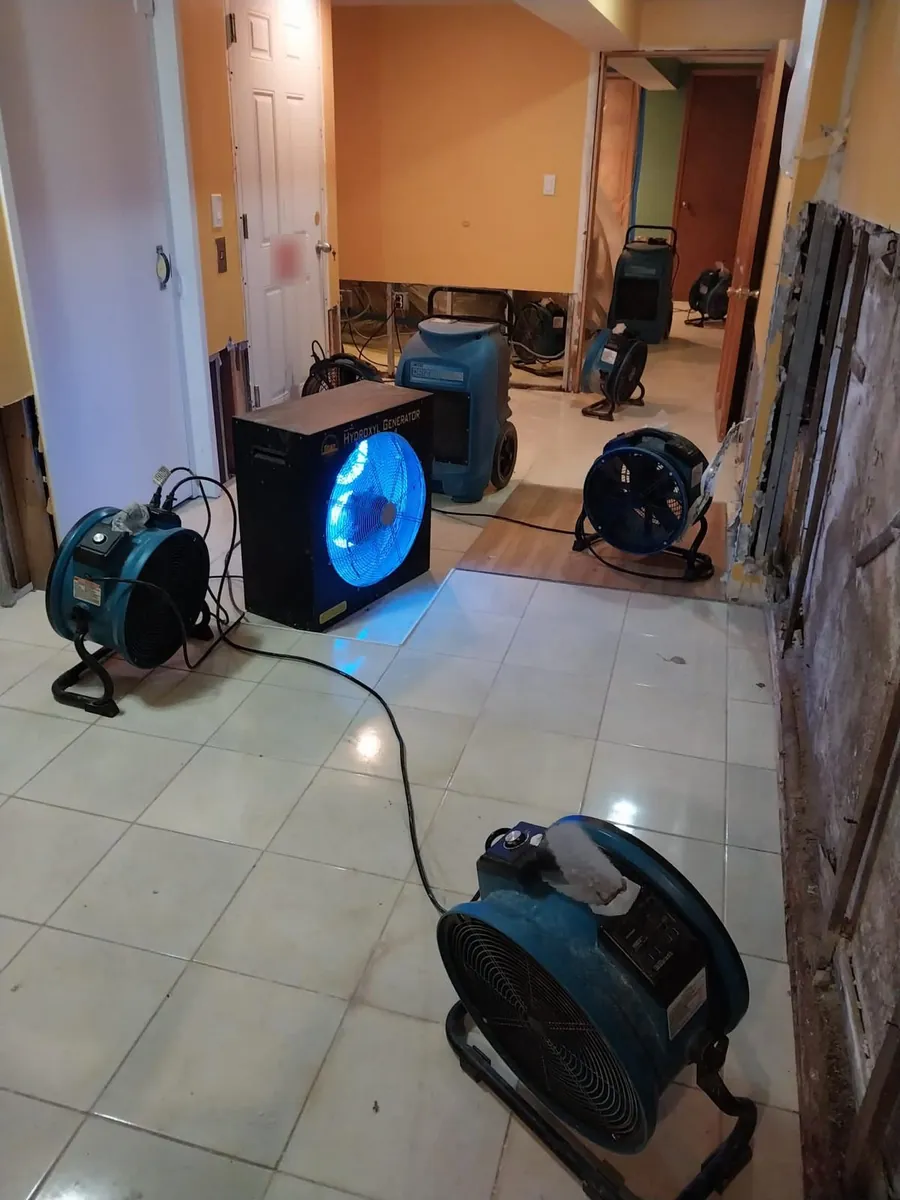
We only cut out what the readings say is wet. Sometimes that's the bottom two feet of drywall, sometimes it's less. Then dehumidifiers and air movers go in, we take readings every day, and the equipment comes out when the numbers say the structure is dry, not before. After that we rebuild. More on the process on our basement water damage page.
When a water heater floods the basement
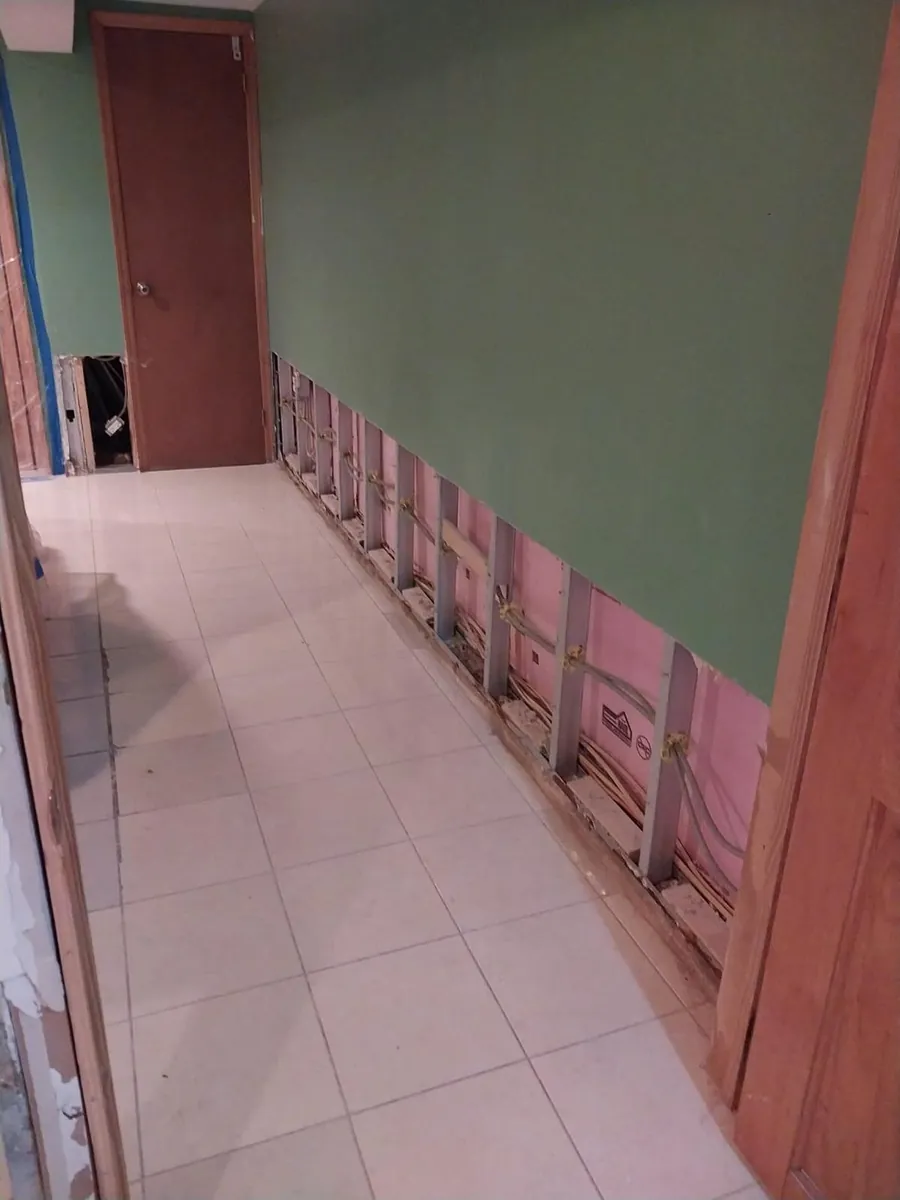
A water heater that gives out over a weekend can put a finished basement under water before anyone finds it. The water runs across the tile and into the bottom of the walls, and mold can already be growing behind the drywall by the time it is found.
We open every wet wall along the floor, take out the soaked drywall and baseboards, treat any mold, and dry the whole level with air movers and dehumidifiers. Photos from a real Marine Park job are on our work page and the water heater leak page.
A note on sewer backups and coverage
Water coming up through a basement floor drain is often a sewer backup, not a plumbing leak. That's what flooded so many Brooklyn basements in the September 2023 downpour, when the sewers simply couldn't keep up. Many homeowners policies only cover it with a separate sewer backup endorsement. It's worth checking your policy now.
What's under a finished basement floor
A lot of Marine Park basements were finished in stages over the years, so one floor can be a mix: ceramic tile in one room, laminate or vinyl plank in the next, carpet over pad in another. Each handles water differently.
- Tile usually survives. The water moves past it, under the baseboards and into the walls.
- Laminate swells at the seams and rarely comes back. Its foam underlayment holds water against the concrete.
- Vinyl plank is waterproof on top, but water gets trapped under it, so it often has to come up so the slab can dry.
- Carpet and pad can sometimes be saved after a clean water leak that's caught early. After sewage, or days of standing water, it goes.
We check under the flooring, not just on top of it, before deciding what stays.
Winter: frozen pipes and outdoor spigots
Detached and semi-attached houses have a lot more exterior wall than an apartment, and that's where pipes freeze. The usual spots in this kind of house are supply lines along an outside basement or kitchen wall, pipes in an unheated garage or enclosed porch, and the outdoor spigot. If the spigot's inside shutoff wasn't closed and drained before winter, the pipe can split inside the wall, and you won't know until it thaws and starts running. Closing that valve every fall is one of the cheapest fixes there is. More on frozen pipe damage.