24/7 Emergency Response  •  Serving NYC & Long Island  •  646-543-2242

Water Damage · Gerritsen Beach

Water Damage in Gerritsen Beach, Brooklyn

Gerritsen Beach is a low-lying peninsula of small wood-frame houses on narrow streets, and in Sandy the bay stood up to seven feet above grade here. Surge, cloudburst or burst pipe, we can get pumps down these narrow streets any hour.

★★★★★ 5.0 from 60+ Google reviewsIICRC-CertifiedNY State Mold License15+ Years of ExperienceLicensed & Insured

The Peninsula

Seven feet of bay water on fifteen-foot streets

Water reaches Gerritsen Beach over the shoreline in a surge and down from the sky with nowhere to drain. And the houses sit so close that a wet yard is rarely one family's problem.

City Planning's 2017 Gerritsen Beach resiliency report traces the Sandy surge in from Gerritsen Inlet and over Plumb Beach and the Belt Parkway. Water stood up to seven feet above grade, and the report says almost every building was affected.

You don't need a hurricane, though. The same report calls storm sewer capacity "very limited throughout the neighborhood" and points to a high water table. Many homes were built at or below grade, with basements partly or fully below street level, so rain that can't drain leans right on the foundation.

Then there's the layout. This started as summer bungalows on small lots with no backyards. Streets run thirty feet down to as little as fifteen, sidewalks included, and many houses have a couple of feet between the facade and the property line.

That shapes where water goes and how we get a pump through your door. And every street feeds into Gerritsen Avenue, the only evacuation route off the peninsula.

Under Your Floor

Raised, filled in or still at grade

Since Sandy, many Gerritsen Beach houses were lifted, rebuilt or had the basement filled, and each type takes on water in a different spot. As of spring 2017, the report counts over 200 Gerritsen Beach households enrolled in Build it Back for rebuilding or elevation.

The original bungalow, basement below the street

Street and yard water hits the boiler, the water heater and the electric panel before anything upstairs. Here we're usually stripping wet paneling, insulation and carpet and drying the masonry.

The house lifted onto a new foundation

Many homes here are a lightweight wood frame on a masonry foundation, a type the report says can be elevated in place. Below the flood elevation, the report says the space should serve only as parking, crawl space, access and storage, with finishes that can take a flood.

Keep it that way and storm water underneath is a cleanup. Finish a den down there with drywall and carpet, and it's a demolition job again. We also check supply lines running through that open space, where they freeze in January.
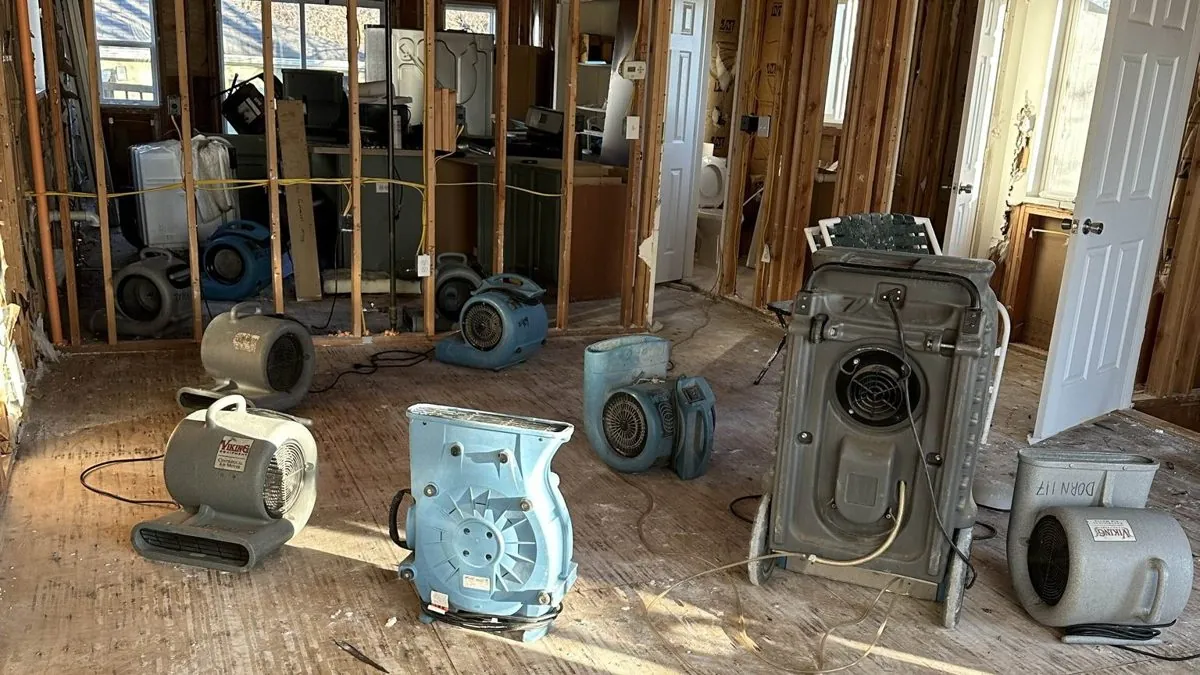
Air movers and a dehumidifier drying a room with the wet drywall cut out
Drying a room after the wet drywall came out

The house with the basement filled to grade

With the cellar filled, a burst pipe or failed tank lands on a wood subfloor instead of a slab, so our meters go under the finished flooring.
Before

Part one: before the next storm

The size of a flood job here gets settled on a dry day: what sits below the flood line and whether the sewer can push back in.

  • Clear the low floors. Papers, photos and anything you'd hate to lose go upstairs.
  • Backwater valve? Get a plumber's opinion. Per DEP's flood preparedness flyer, the valve keeps the sewer from pushing up into the house, and the basement sink and toilet stay unused while it's closed.
  • Lift the equipment where you can. The same flyer names boilers, electrical panels, heaters, generators, utilities and meters as things to elevate if possible.
  • Help the drains. With sewers this small, a clogged grate floods the block sooner. DEP asks people to carefully pull leaves and trash off catch basin grates before or during a rain. Never stand in moving water to do it.
  • Talk to next door. At a few feet apart, one downspout emptying into the gap wets both foundations.
  • Plan your way out. Gerritsen Avenue is the only road off the peninsula, so leave early when the city says go.
  • Save our number. 646-543-2242.

After

Part two: once the water is inside

Get everyone out of any space below the street, keep away from wet outlets and the panel, and call us. Then work down this list.

  • Rising bay water? Stay out until it stops coming in and that level has no power.
  • Leave the boiler alone. A boiler, water heater or panel that went under gets looked at by a licensed tech before it runs again.
  • Sewage at the floor drain on a dry day? Call 311 and keep the tracking number. DEP promises an inspection within six hours, slower in big storms, and the line from your house to the main is the owner's to fix.
  • Note the water line. How high it reached on each wall tells us how far up to check.
  • Call 646-543-2242. Dispatch answers 24/7. We're usually there 30 minutes to an hour and a half from the call, depending on the hour and traffic.

Here's how our side runs from there:

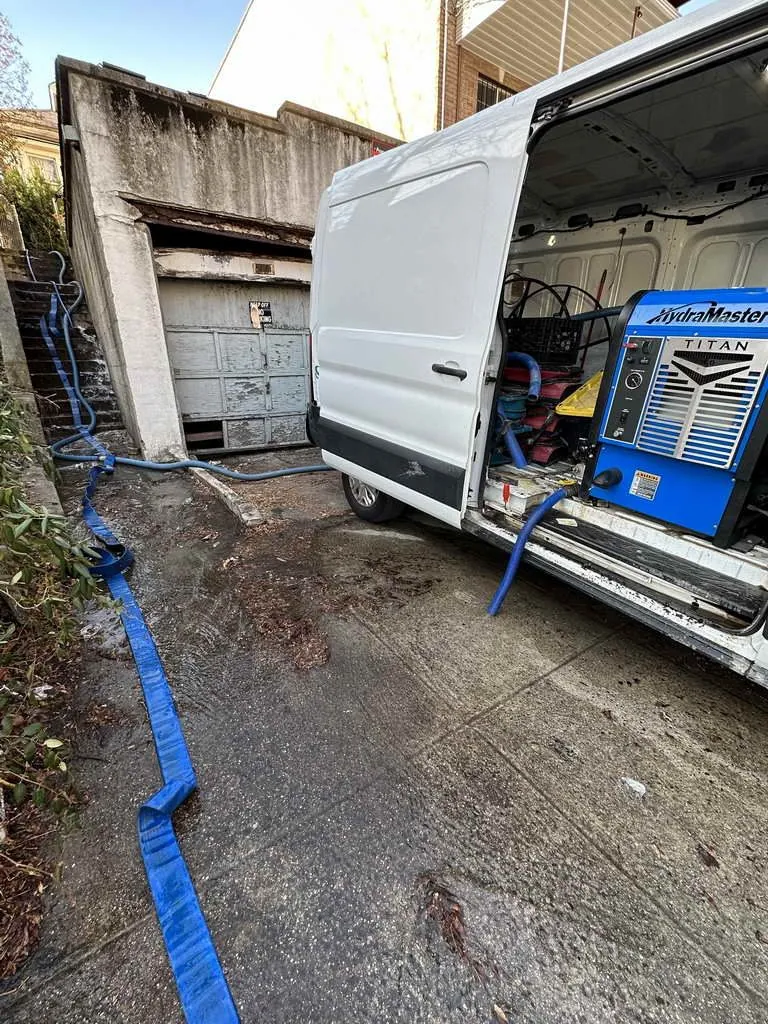
  • Getting in. On the tightest streets the truck may stay on a wider block, and we run hose to the house or carry portable units in.
Truck-mounted extraction unit with hoses run out to a job
Truck-mount extraction with hose run to the house
  • Water out. Bay and street water brings in whatever it crossed on the way, so we treat it as Category 3. Porous materials it reached (drywall, insulation, carpet and pad) come out.
  • Cut to the meter. Flood cuts go as high as the readings show the wall is wet. Sometimes that's a foot, sometimes most of the wall.
  • Clean and treat. Everything left standing is washed down, then sprayed with antimicrobial.
  • Dry and log it. Equipment runs around the clock on separate circuits so the breakers hold. We read walls and floors daily. Drying usually takes much less than a week, and the machines leave when the numbers are normal.
  • Put it back. Our own crew hangs the drywall, paints and puts the floors back. The report notes tight sites here make staging construction difficult, so we plan deliveries with you and your neighbors.

When the whole block floods, see our page on storm flooding cleanup. Across Gerritsen Avenue, see water damage in Marine Park; for the canal homes past the park, water damage in Mill Basin; and for the borough, water damage in Brooklyn.

Questions

Gerritsen Beach flood questions

There was no surge, just a lot of rain, and my yard and basement still filled up. Why?

City Planning's report says storm sewer capacity is very limited across Gerritsen Beach and the water table is high. That means heavy rain can pond with nowhere to go and press on walls that sit below the street.

Rain off the street isn't clean water, so we handle it like a flood, not a pipe leak. If it came up through the floor drain, call 311 as well.

My house was raised after Sandy. Does water under it still matter?

Less than it used to, if the space down there is still just parking, storage and access. We check it anyway, because wet framing, insulation between the floor joists or a room someone finished down there can stay wet and grow mold. Pipes running through that open space can also freeze in winter.

My street is too narrow for a big truck. Can you still get the water out?

Yes. City Planning puts some streets here at as little as fifteen feet wide, sidewalks included. We park where we can, run hose to your door and bring portable pumps, air movers and dehumidifiers in by hand.

Water under the house or in the basement right now? All Star Restoration answers 646-543-2242 day or night for Gerritsen Beach water damage.

Your property. Our priority.

Water, fire, mold, or sewage, one call starts the recovery. We show up fast and we do not leave until it is done right.

Call 646-543-2242 Request Service

Request Service

Tell us what happened

We'll call you right back, and give you a free estimate. For an active emergency, the fastest way to reach us is by phone, day or night.

24/7 Emergency Line
646-543-2242

By submitting, you agree to be contacted by All Star Restoration by phone, text, or email about your request.

Call NowRequest Service