Why water heater leaks turn into floods
Most home tanks hold somewhere between 40 and 80 gallons, but the tank isn't the limit. As long as the cold supply valve is open, water keeps coming. A failure that starts on a Friday night can run all weekend before anyone goes downstairs.
The usual failure points:
- The bottom of the tank rusting through, which gets more likely as a heater ages
- A relief valve that opens and keeps discharging
- Loose or corroded supply connections on top of the tank
- A drain valve at the bottom that starts to drip, then lets go
Heaters usually sit in a basement or utility closet, right next to finished rooms, so the water heads straight for carpet, drywall and anything stored on the floor.
What to do the moment you find it
- Shut the cold water valve on the pipe going into the top of the heater
- Turn the gas control to off, or switch off the heater's breaker if it's electric
- If water is near outlets or power strips, stay out of it, and only shut power at the panel if you can reach it from a dry spot
- Take photos and video before anything gets moved
Then call 646-543-2242. The sooner drying starts, the less has to be torn out.
A recent job: water heater flood in a Marine Park basement
A water heater failed in a Marine Park home and flooded the finished basement over a weekend. Water spread across the tile floor of several rooms and wicked up into the walls.
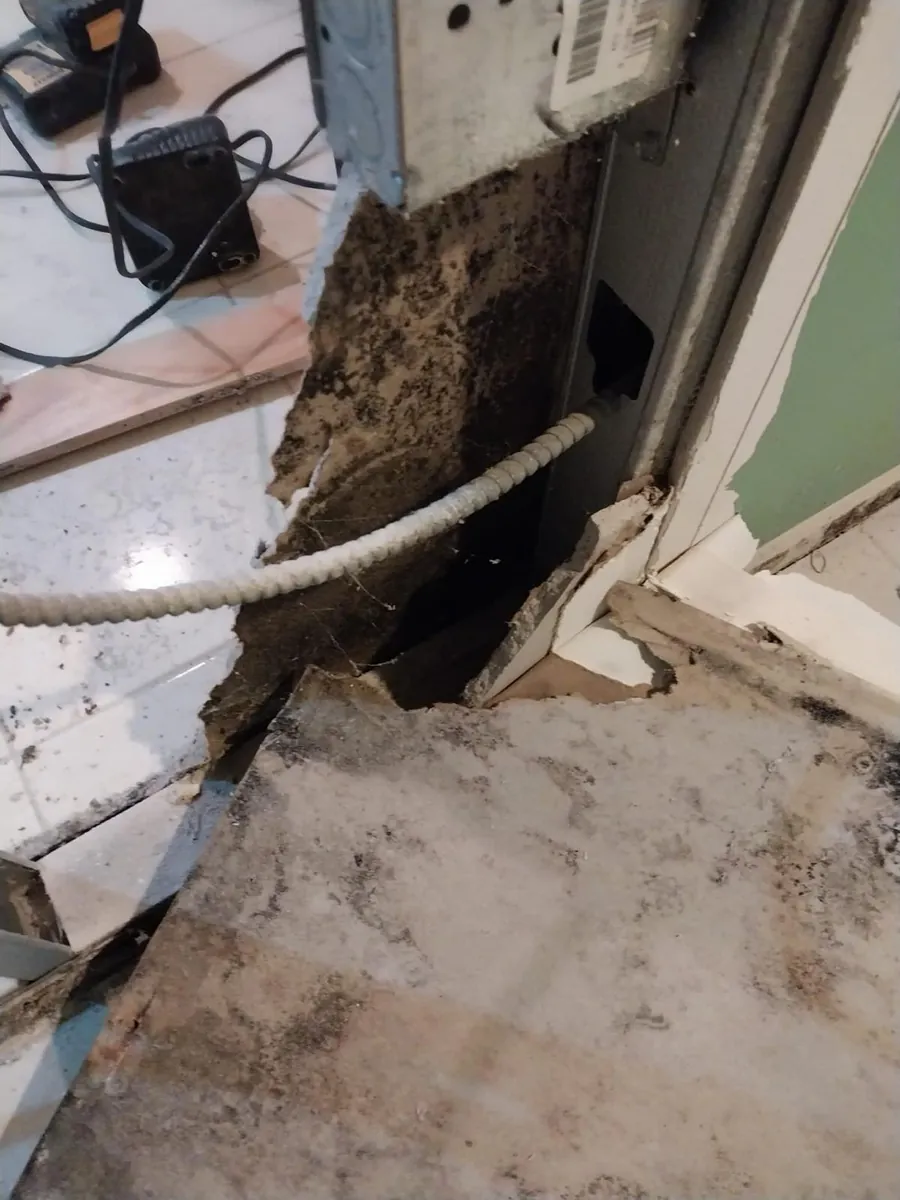
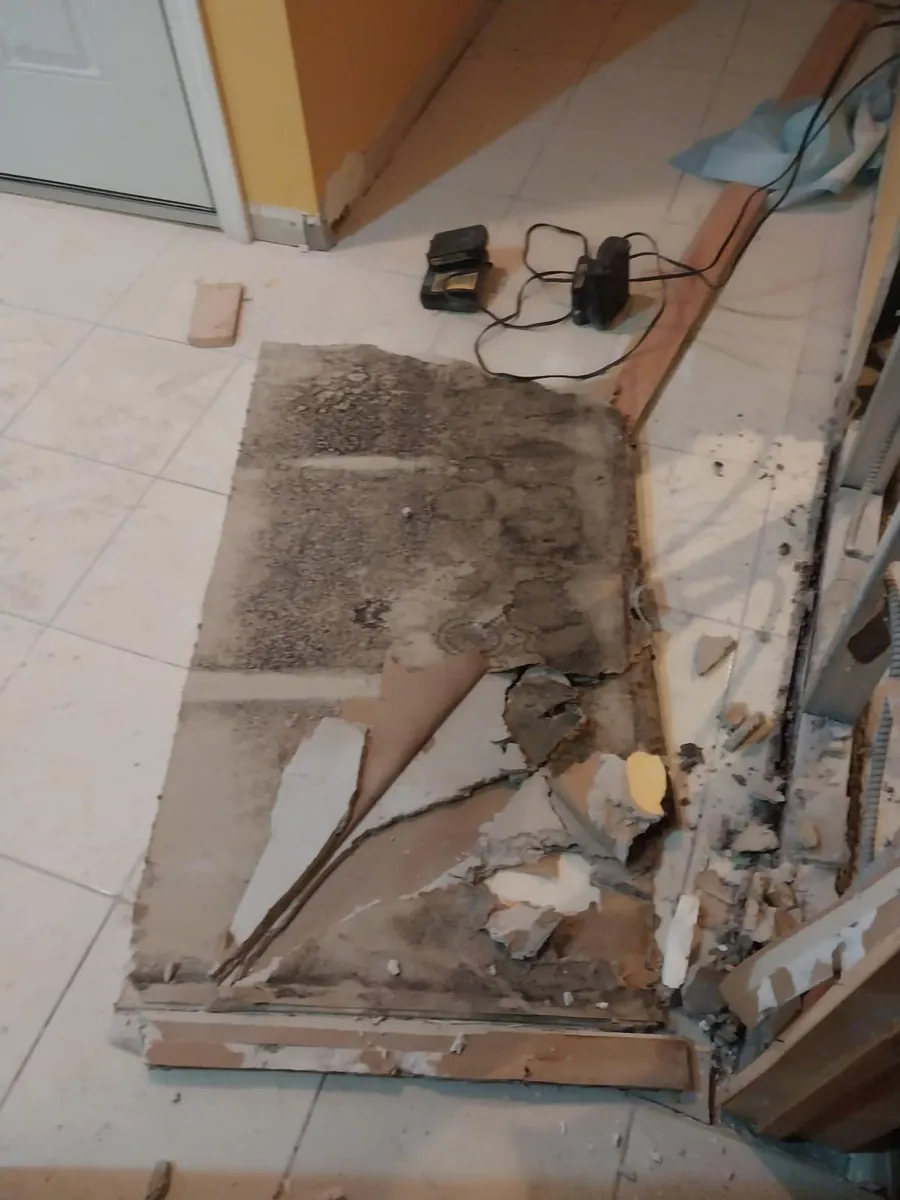
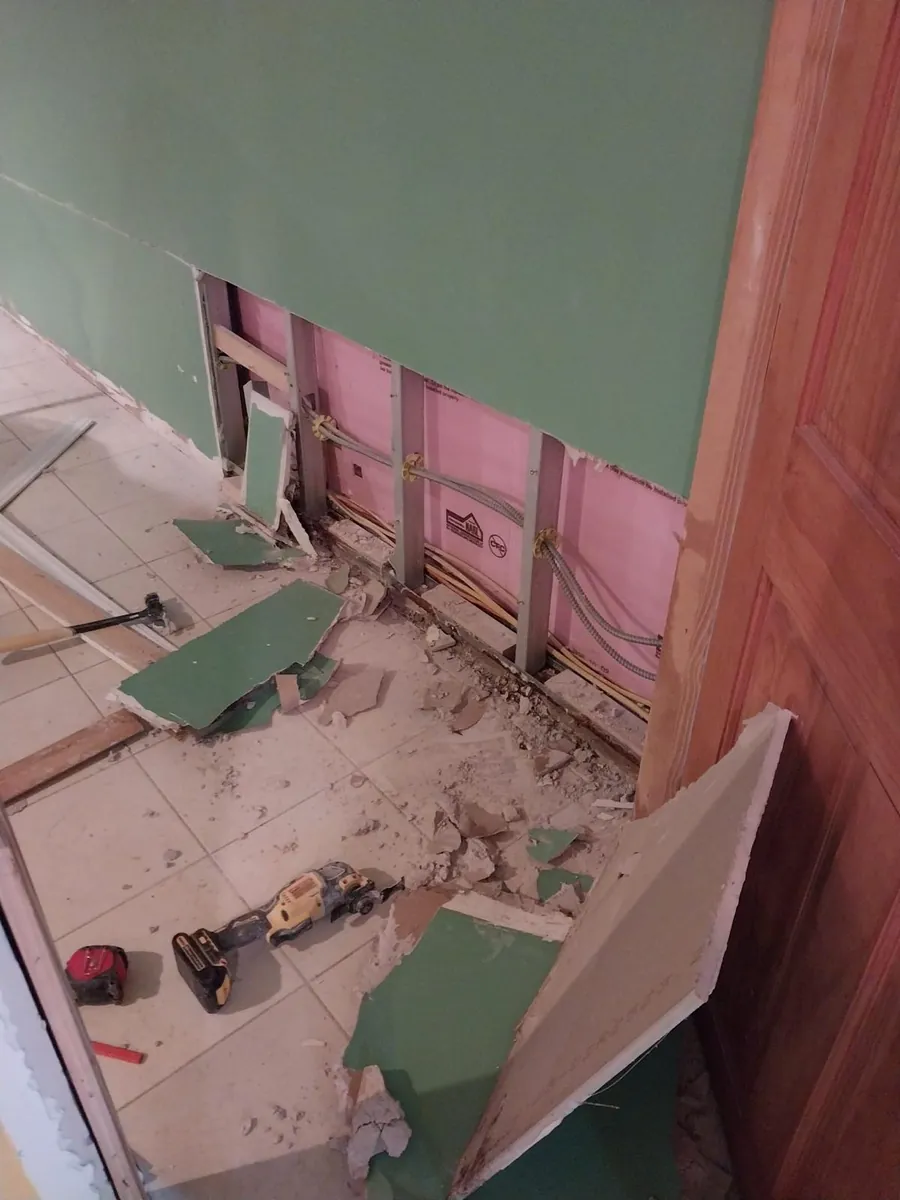
The tile held up. The walls didn't. The drywall sat on steel studs with foam insulation board behind it, and once we opened it up, mold had already started on the back of the wet drywall, out of sight from the room.
How the job went:
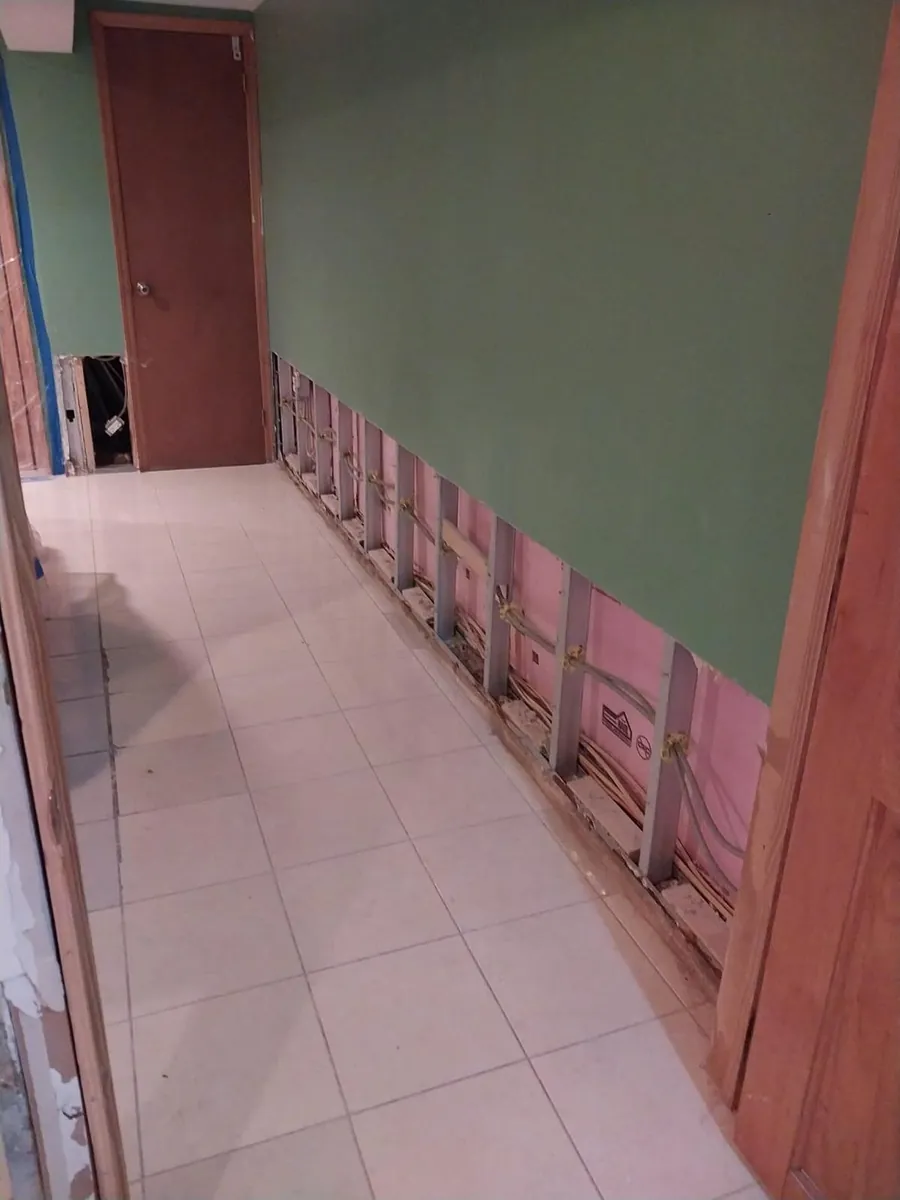
- Cut the wet drywall a couple of feet up along every affected wall and removed it with the baseboards
- Left the bottom of the walls open so the steel stud tracks, where water collects, could dry out
- Wrapped furniture and closet doors in plastic to keep them clean during the work
- Treated the areas where mold was found
- Set up air movers, dehumidifiers and a hydroxyl generator to dry the basement and deal with the odor
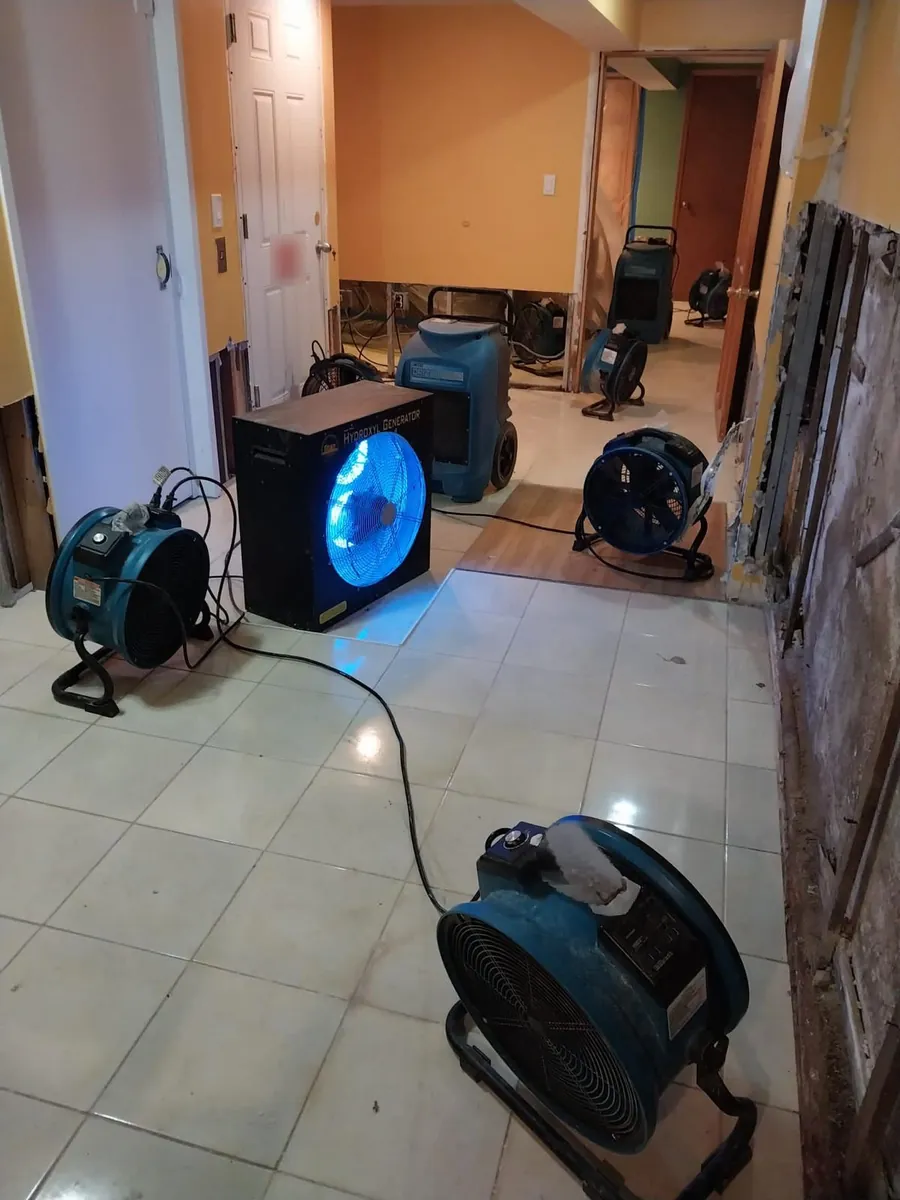
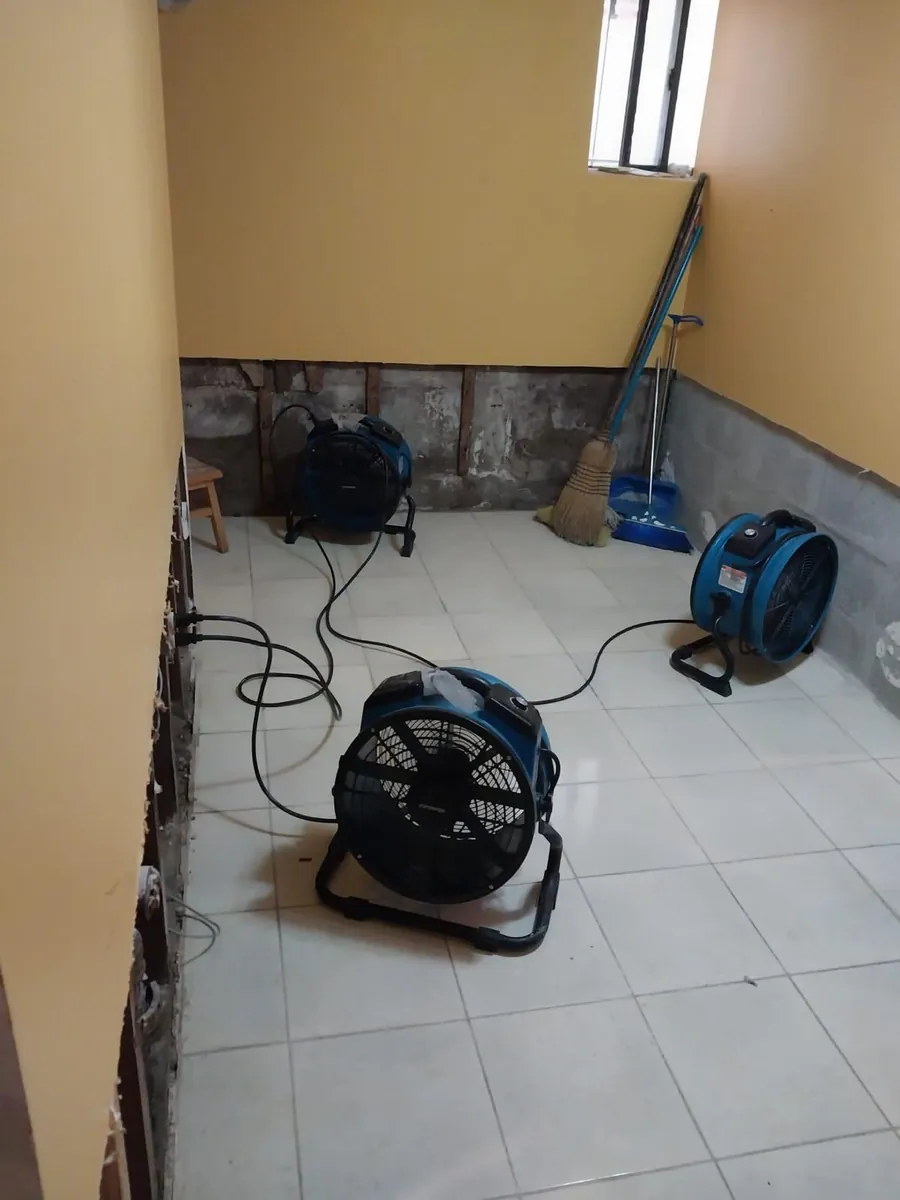
More on water damage in the neighborhood on our Marine Park water damage page.
Drying a finished basement after a water heater leak
Tile floors usually survive. The trouble is everything the water reaches at the edges: baseboards, the bottom of the drywall, insulation, and wood or steel framing at floor level. Water slips under the baseboards and into the wall cavity, so a wall can look fine from the room while the bottom of it is soaked. We take readings along every wall, open up what's wet, and run the equipment until the readings come back to normal. More on basement water damage and structural drying.
Insurance and water heater leaks
A sudden failure, like a tank that bursts, is generally treated as sudden and accidental water damage under a homeowners policy. The heater itself usually isn't covered, since it's an aging appliance, and a slow leak that went on for weeks can be harder to claim. Check your policy, and document everything before cleanup starts. We keep photos and daily readings for the claim. See does homeowners insurance cover water damage.