24/7 Emergency Response  •  Serving NYC & Long Island  •  646-543-2242

Water Damage · Flatlands

Water Damage Restoration in Flatlands

Much of Flatlands is two-story attached, semi-detached and detached houses, most with the boiler, water heater and laundry in the cellar, and many with a neighbor on the other side of the wall. When water gets loose, we track where it went, dry it until the meters agree and rebuild what came out.

★★★★★ 5.0 from 60+ Google reviewsIICRC-CertifiedNY State Mold License15+ Years of ExperienceLicensed & Insured

Our Work Here

Flatlands houses and co-ops, wet to rebuilt

Whatever caused it, the job covers the same ground:

  • Stopping the source, or showing you the valve that does
  • Pumping out standing water and extracting carpet and pad
  • Mapping the wet area with moisture meters and thermal imaging, inside walls too
  • Cutting out what will not dry, like soaked insulation, swollen paneling and wet pad
  • Cleaning and an antimicrobial where the water was dirty
  • Drying until the wet wall reads the same as an untouched one
  • Putting back walls, floors and paint with our own crew

The inspection and the estimate are free.

A City Planning Commission report on a rezoning at Flatlands Avenue and East 55th Street describes the blocks around it: mostly two-story attached, detached and semi-detached buildings, with apartment buildings of three to six stories mixed in.

That mix decides how we work here. In the houses, the trouble is usually a cellar or a finished basement. In the apartment buildings, it is units stacked on top of each other.

Job Order

How a job runs, from the call to the rebuild

  • The call. Our 24/7 line picks up and asks what is wet, where it is coming from and whether the water is clean or dirty. Arrival is usually 30 minutes to an hour and a half, depending on the hour and traffic.
  • The walkthrough. We go room by room with you, explain what each reading means, and agree on what gets cut before a single wall is opened.
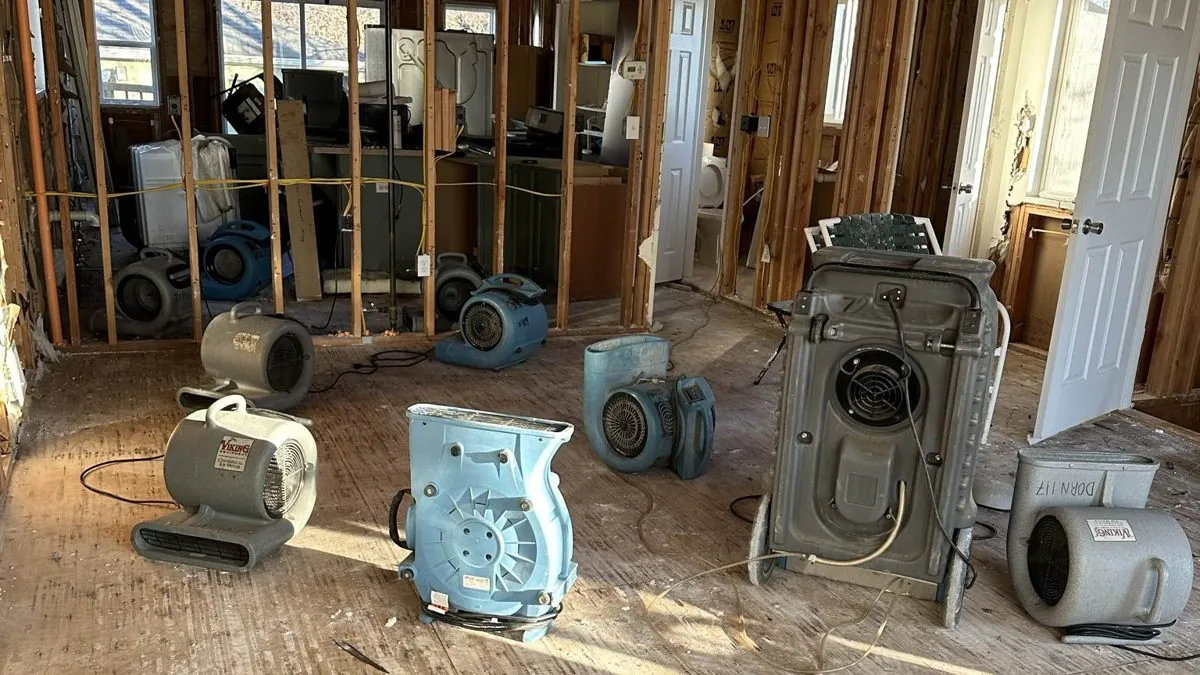
Air movers and a dehumidifier drying an opened-up room
Drying equipment set up after the tear-out
  • Drying visits, then the rebuild. We come back to read every wall and floor and move equipment toward whatever is still wet. Once the numbers say dry, the rebuild crew starts from those same readings, so you are not hunting for a contractor once the fans go quiet, and at the end we go through every finished room together.
Party Walls

Following water through cellars and shared walls

An attached house shares walls with the houses on both sides, and a semi-detached pair shares one. A supply line that lets go in your kitchen can run along the joists and turn up as a stain on the party wall, or in the cellar next door before yours.

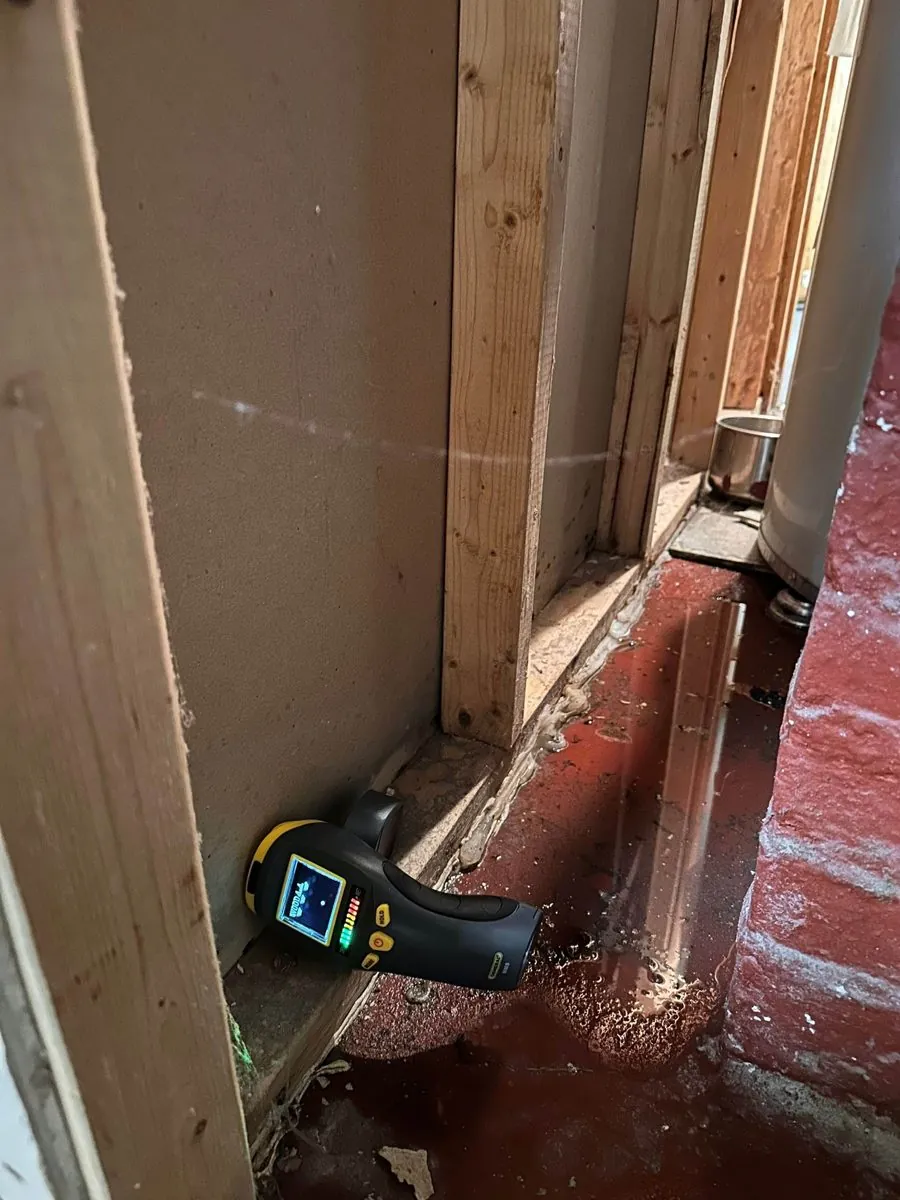
So we do not stop at the spot you can see. A thermal camera shows cooler, damp patches behind paint and paneling. A pin meter confirms what the camera suggests, and we note readings room by room so you can see exactly how far it went.

Technician scanning a wall for moisture with a meter
Reading a wall before anything gets cut

Downstairs, we check the base of every wall, the bottom plate under a finished room, and the slab around the boiler and water heater. Carpet over concrete and paneling on furring strips are where water hides longest.

If the trail leads next door, we tell you, and with your OK we will talk to your neighbor about checking their side.

Apartment Buildings

Co-ops, supers and the unit below

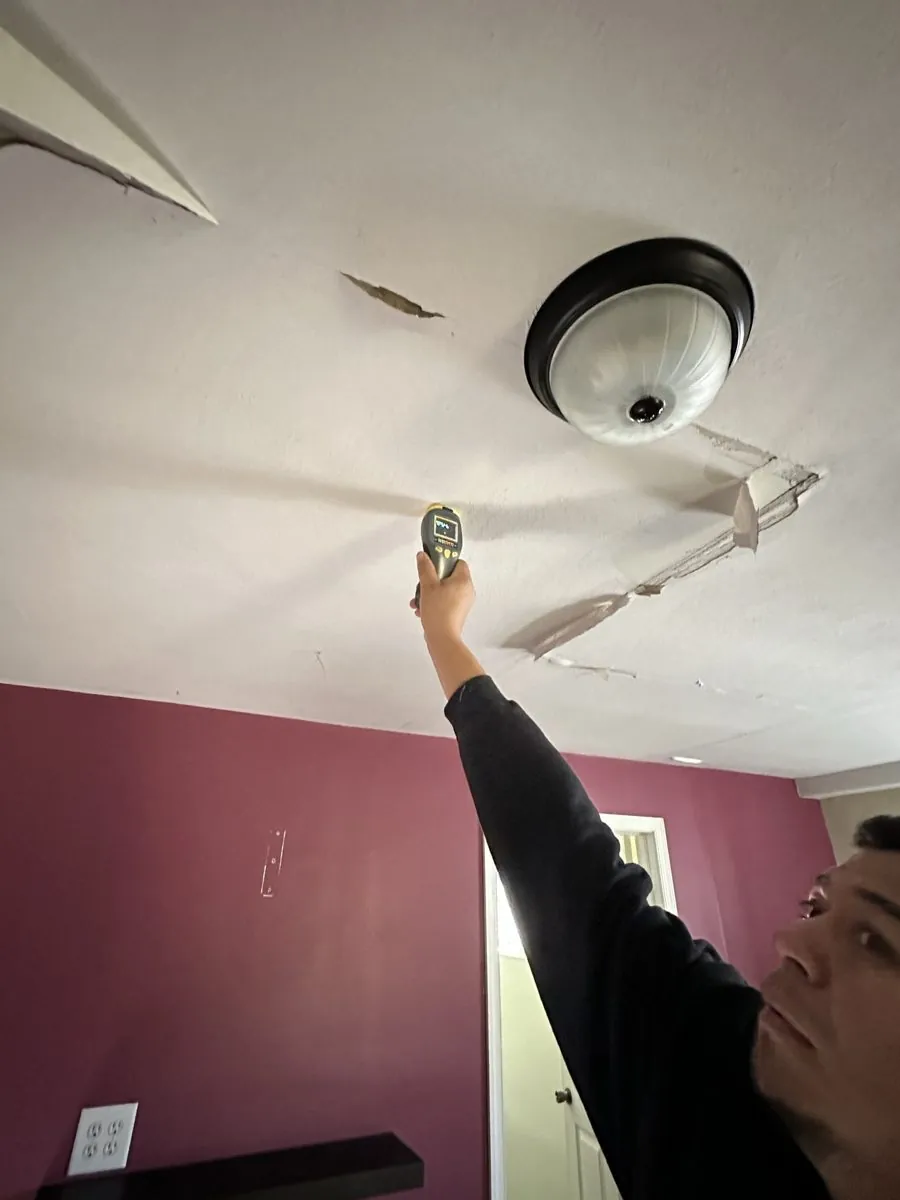
In the three- to six-story buildings, including the co-ops near Flatlands Avenue, a leak rarely stays in one apartment. A riser or a tub upstairs can come through the ceiling below and keep going down.

We work with whoever runs the building: the super who shuts the riser, the managing agent, the board that signs off on opening a shared wall, and the tenants whose units we need to get into. Each affected apartment gets metered, the readings are kept by unit, and management gets a copy so the repair is not held up.

Moisture meter held against a stained ceiling
Checking a ceiling under the unit where it started

Shareholders and renters can call us directly. There is more on leaks between apartments on its own page.

Closer to the bay, our Marine Park water damage page covers the houses south of here, and we handle water damage anywhere in Brooklyn the same way.

Below The Street

Rain, sewers and the Paerdegat Basin

DEP lists parts of Flatlands among the neighborhoods that drain toward Paerdegat Basin, on the northwestern edge of Jamaica Bay. Its monitoring report describes that drainage area as combined sewer, served by the Coney Island treatment plant. In plain terms, rain and household sewage share the same pipes.

When a hard rain fills those pipes, sewer water can rise through a cellar floor drain or a low toilet. That is Category 3 water. More material comes out, everything it touched gets cleaned and disinfected, and we explain each cut before we make it. Our page on sewer backups goes deeper.

Flood maps are a separate question. That City Planning report found its Flatlands Avenue site outside the flood zone but one block from FEMA's shaded X zone, so the risk can change from one block to the next.

By Problem

Pick the kind of water damage you have

Cellar, kitchen or the co-op unit upstairs: start with the card closest to what happened, or call and we will look at it with you.

Flatlands FAQ

What people in Flatlands ask before we start

Water came up through the floor drain in my cellar during a hard rain. Is it sewage?

Treat it as sewage. Where rain and wastewater share one pipe, what pushes up through a cellar drain in a downpour is a mix of both. Keep kids and pets out, stop running water in the house and call us. We pump it out, remove what soaked it up and disinfect.

Can you dry the wall we share with the house next door without going into their house?

Often we can dry your side and take readings through it. If the meters show the water crossed over, their side needs drying too, and we will ask your neighbor for access instead of guessing.

Our co-op ceiling is stained from the unit above. Who do we call first?

Call the super or managing agent so the riser or fixture upstairs gets shut off, then call us. We meter both your unit and the one above, and management gets the readings.

Call All Star Restoration at 646-543-2242 any hour and we will set up a free inspection at your Flatlands home.

Your property. Our priority.

Water, fire, mold, or sewage, one call starts the recovery. We show up fast and we do not leave until it is done right.

Call 646-543-2242 Request Service

Request Service

Tell us what happened

We'll call you right back, and give you a free estimate. For an active emergency, the fastest way to reach us is by phone, day or night.

24/7 Emergency Line
646-543-2242

By submitting, you agree to be contacted by All Star Restoration by phone, text, or email about your request.

Call NowRequest Service