Water Damage · Midwood
Midwood's side streets are mostly detached and semidetached houses, and the basement is where they keep the boiler, the water heater and the washer, so that's where a leak lands. Day or night, we find which corner it came from, dry it to readings and put the room back.
The Basement
In a Midwood house, a leak almost always finishes in the basement, because that's where these houses keep their plumbing, and it's the lowest floor. City Planning's Midwood rezoning, adopted in 2006, covered about 80 blocks of mostly two- and three-story detached and semidetached houses, in an area mainly built up by World War II.
In the houses we see here, one level holds the boiler, the hot water tank, the washer, a den or playroom, and a few decades of stored boxes.
A split hose, a tank that gives out, a floor drain pushing back in a downpour: all of it lands on that floor. And a finished room hides how far it spread.
Corner By Corner
The layout changes house to house, but water tends to start or collect in the same five spots. Here's what fails in each, and what to look at on a dry day.
What fails: washer hoses that crack with age, a drain hose that jumps out of the standpipe mid-cycle, and the floor drain beside the machine. That drain connects straight to the sewer, so when the street line backs up in heavy rain, it comes up right there. More on washing machine leaks.
What to check: bulges or rust at the hose ends, and the two small valves behind the washer. If the floor drain has gurgled during a storm, ask a plumber about a backwater valve.
DEP's flood preparedness flyer says the valve can keep sewer water out of a house, and warns against using basement fixtures while it's shut.
What fails: the boiler's relief valve, a weeping fitting nearby, and the water heater, which usually goes all at once when the bottom rusts through. The first cold night in fall often exposes a tired heating joint. More on water heater leaks.
What to check: crust or a rust ring under the tank, a damp spot under the relief valve's pipe, and the cold-water valve that feeds the heater.
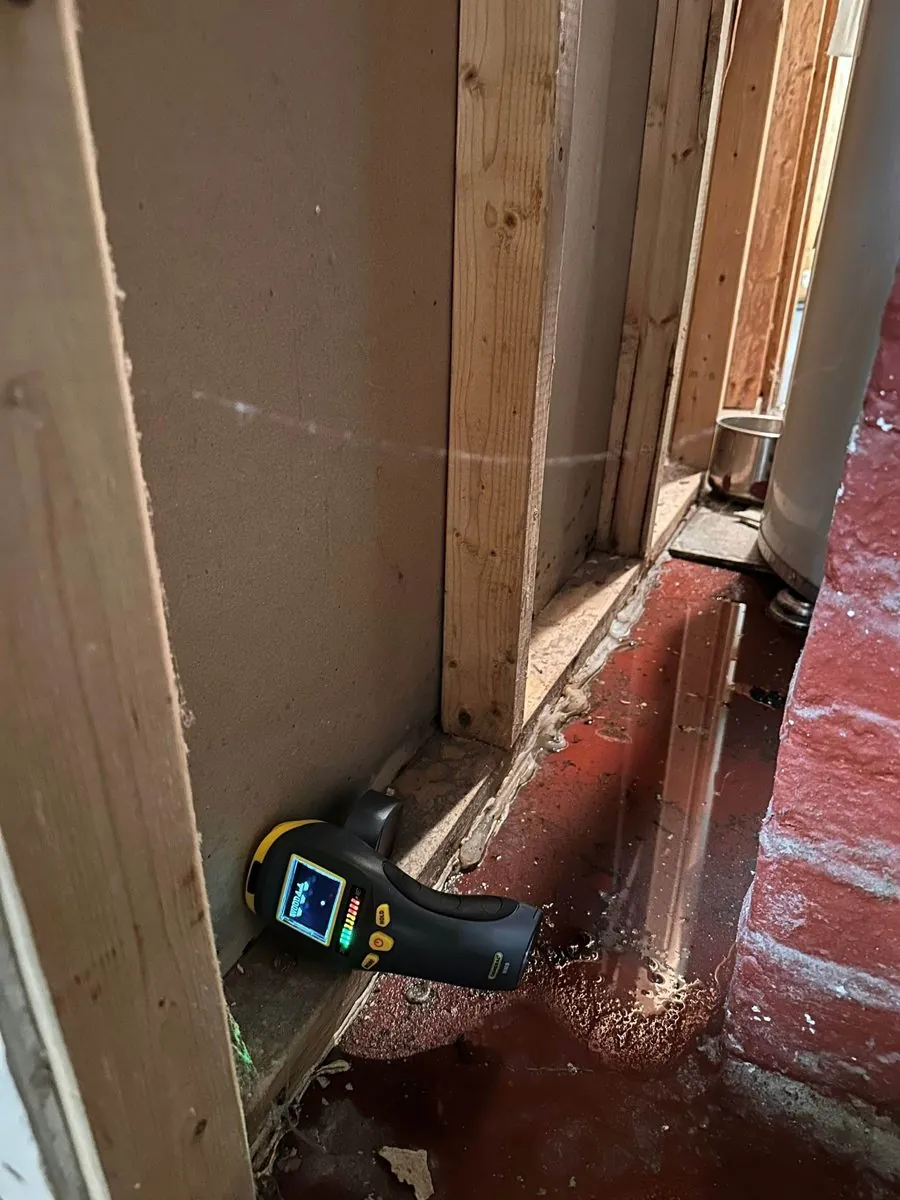
What fails: nothing in here leaks, but this is where damage hides. Paneling or drywall on furring strips over block, carpet and pad right on the slab. Water from the boiler room slips under the wall and wicks up behind the panels while the carpet still feels almost dry.
City Planning’s rezoning notes that small-scale building in Midwood continued into the 1980s, so one block can hold basements finished in very different decades. That is why we read every wall before deciding what comes out.
What to check: a dark line at the bottom of the paneling, a musty smell, carpet that's cold and heavy at the edges. EPA's mold and moisture guide sets 24 to 48 hours as the window for drying wet areas to prevent mold growth, and the den is where that window gets missed.
What fails: cardboard boxes on the bare floor soak up the first inch of water and stay wet for days.
What to check: shelves or plastic bins. EPA's target for indoor humidity is under 60 percent, and 30 to 50 is better. A cheap meter on the shelf tells you if this corner runs damp all summer.
What fails: many houses have steps down from the yard to a basement door, with a small drain at the bottom. Leaves clog it and a summer storm pours in under the door. DEP's flyer names basement doors among the below-street spaces most vulnerable to flooding.
What to check: clear that drain every fall, and look for a water line inside the door.
First Hour
In a Midwood basement, your first move depends on which corner the water is coming from. Get people upstairs, stay off a wet floor near outlets or the panel, then shut off the source if you can reach it safely.
If a pipe, the washer or the water heater let go, photograph the rooms and the source first. Then call 646-543-2242. Dispatch answers 24/7.
Apartments
City Planning's rezoning document puts apartment buildings of four to eight stories along Avenue K, Ocean Avenue, Kings Highway and parts of Avenue N. Live in one of the avenue apartment buildings? Start with the super.
In those buildings, the water usually comes from above. A line or a tub upstairs lets go and shows up as a stain or a drip in your ceiling.
Get the super or management to shut off the source, then call us. We meter your unit and its neighbors and record where it started. Our Sheepshead Bay page covers how that plays out in a co-op.
How The Job Runs
The job ends when our meters say the basement is dry, not on a date picked in advance. Then the same crew rebuilds.

For a burst pipe or a failed water heater, your adjuster gets our photos and readings.
What drives the cost is how much finished wall and floor has to come out and whether it was sewer water. The estimate is free.
For the rest of the borough, see water damage across Brooklyn.
Questions
Sometimes. Solid wood paneling that got wet from clean water can often come off, dry and go back up. Thin paneling with a pressed backing usually swells and has to go. Either way the wall behind it gets metered, because that's where the water sits.
If the water stayed below the burner and the controls, usually yes, and the warmth helps the drying. If the burner or wiring got wet, leave it off until your boiler service company checks it. We work around whichever it is.
You can call. We'll come look and document your unit. Management usually decides on work to walls, pipes and shared areas, and we'll share our readings with them so the repair isn't held up.
Basement wet, or a stain spreading on an Ocean Avenue ceiling? Call All Star Restoration any hour at 646-543-2242 and we'll come look at your Midwood basement.
Water, fire, mold, or sewage, one call starts the recovery. We show up fast and we do not leave until it is done right.
Call 646-543-2242 Request ServiceRequest Service
We'll call you right back, and give you a free estimate. For an active emergency, the fastest way to reach us is by phone, day or night.