Water Damage · Flatbush
Flatbush runs from tall Victorian houses on landmark blocks to the apartment buildings along Ocean Avenue, and water moves differently through each. Day or night, we find where it went, dry it out and put the rooms back together.
The Whole Job
When a pipe, a roof or an appliance lets water loose in your home, we take on the whole job:
Having us look costs nothing. The inspection and the estimate are both free.
Flatbush mixes three settings: big frame houses, houses inside historic districts and larger apartment buildings. Below is how the work changes in each one.
Victorian Houses
City Planning’s Flatbush rezoning document describes the detached houses in its study area: many were built in the early 1900s in the Victorian style, and in the historic districts they typically stand two and a half to three stories tall.
That height matters when something leaks. A third-floor bathroom or a roof valley over the attic room can send water down through two ceilings before anyone notices a stain. On the way it tends to follow a pipe chase, a chimney or the stair wall.
So we start at the top and work down. The thermal camera picks out cool, damp patches behind old plaster and wood trim, and a pin meter checks each one. We log readings floor by floor, which also tells us whether the mark over the dining room is new water or a stain from years back.
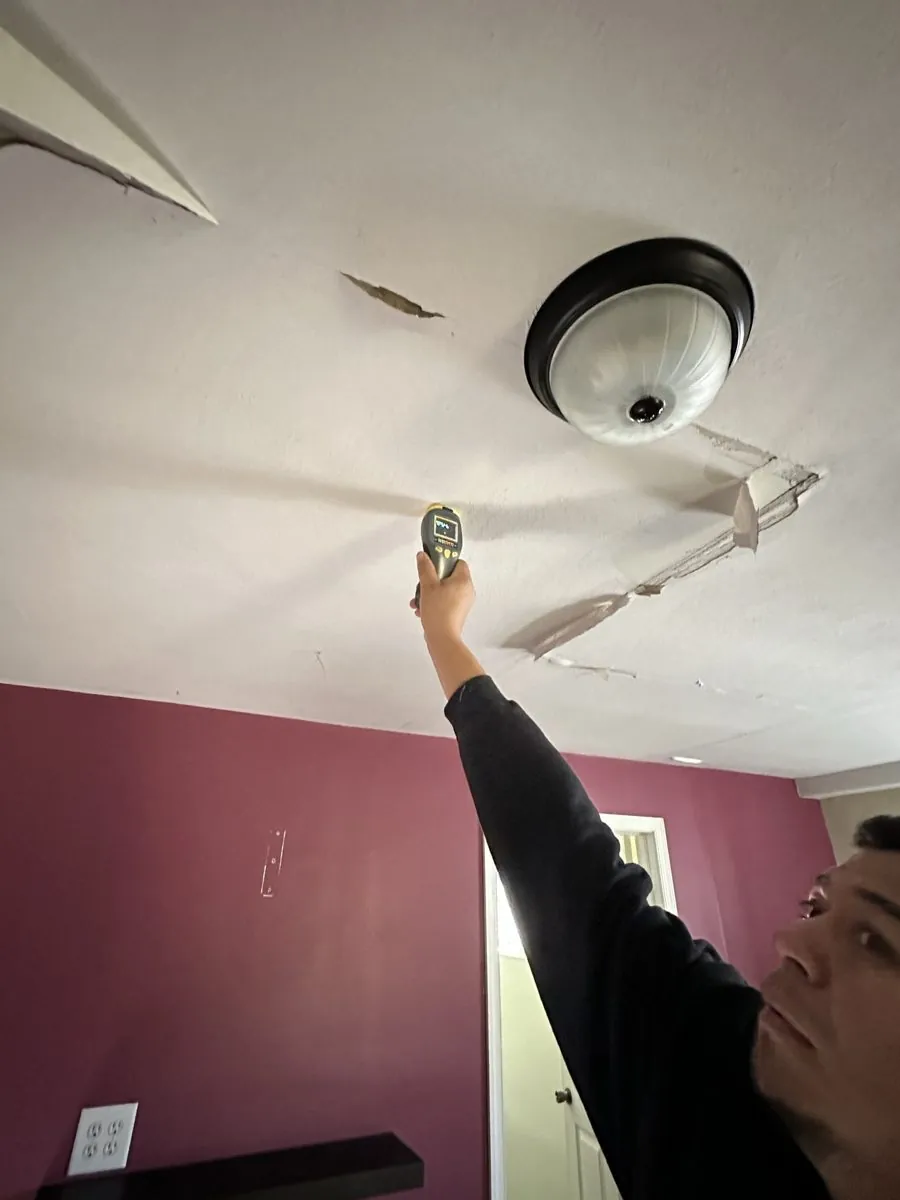
What comes out is decided with you. Plaster that has pulled away from its lath, or a ceiling that sags, has to come down. A wall that is wet but still sound can often be dried in place. Original trim, doors and built-ins are taken off carefully and set aside, not thrown out.
Old strip oak floors get read board by board before anyone talks about replacing them. There is more on that on our page about wet wood floors.
Landmark Blocks
The same City Planning document lists Landmarks Preservation Commission historic districts in this part of Flatbush, among them Prospect Park South, Ditmas Park, Albemarle and Kenmore Terraces, and Fiske Terrace-Midwood Park.
If your house sits in one, nearly all of our work happens inside. LPC’s permit guidance says a permit is needed for work that affects the exterior, and for interior work that needs a Department of Buildings permit. A temporary tarp over a hole in the roof doesn’t need one, but the permanent repair afterward does.
Running drying equipment in a parlor or replacing a wet closet floor doesn't touch the outside of the house. When a repair looks like it might, such as a rotted window frame or a porch roof that let the water in, we flag it before planning around it, so you can check with LPC. Meanwhile the drying inside keeps going.
Ocean Avenue
The rezoning document also describes medium-density apartment buildings, four to six stories in some districts and six to eight in others, and it notes apartment buildings along Ocean Avenue and other streets.
In a building that size, water from one kitchen can end up in several. A failed riser or an overflowing tub can reach two or three apartments below before the valve is closed.
We coordinate with the people who have a say. The super closes the line, the managing agent sets access, the co-op board approves opening any shared wall, and the shareholders or renters let us in. Each apartment gets its own set of readings, and management receives them so the repair isn't stalled. Our page on leaks in apartment buildings goes further.

Renters and owners can call us directly. The side streets just south are covered on our Midwood water damage page. Farther east, see water damage in East Flatbush.
After You Call

Outside Flatbush, the same process runs everywhere we work, and our Brooklyn water damage restoration page covers the wider borough.
Common Calls
Each one links to how we handle it, from a frozen line in a back bedroom to a dripping ceiling on Ocean Avenue.
Fast cleanup and drying after a pipe lets go.
See Burst Pipe CleanupWinter pipe failures handled end to end.
See Frozen Pipe DamageLeaks from above traced, dried, and repaired.
See Ceiling Water DamageFlooded basements pumped, dried, and restored.
See Basement Water DamageCo-op, condo, and rental water damage handled.
See Apartment Water DamageWater heater, HVAC, and appliance leak cleanup.
See Appliance LeaksClean-water overflow cleanup and sanitizing.
See Toilet Overflow CleanupAir movers and dehumidifiers that dry to the cavity.
See Structural DryingAsked In Flatbush
Keep everyone out of the room below and don't push on the bulge, since a soaked plaster ceiling can come down all at once. Set a bucket nearby, get a roofer for the leak and call us. We take down what has failed, dry the attic floor and framing, and rebuild the ceiling.
Drying doesn't change the outside of the house, so it isn't the kind of work LPC's permit rules are aimed at. Approval comes into play when a repair affects the exterior, or when interior work needs a Buildings permit. If we see a repair heading that way, we tell you early.
Often, yes. Solid wood that got wet can usually be dried where it is, or taken off, labeled and dried on its own. We avoid cutting it. Pieces that swelled or split badly get pointed out to you, and you decide what happens to them.
Yes. We extract, dry and keep a record of the readings, then give the board's contractor a clear picture of what was removed and what is dry. If the board would rather we rebuild as well, our crew does that too.
A ceiling dripping off Cortelyou Road or water across a Ditmas Park parlor floor is Flatbush water damage we handle day or night. The All Star Restoration number is 646-543-2242, and the first look is free.
Water, fire, mold, or sewage, one call starts the recovery. We show up fast and we do not leave until it is done right.
Call 646-543-2242 Request ServiceRequest Service
We'll call you right back, and give you a free estimate. For an active emergency, the fastest way to reach us is by phone, day or night.