Water Damage · Jackson Heights
Jackson Heights is known for its brick garden apartment co-ops, with attached houses and taller 1930s and 1940s buildings mixed in. A leak in one of them can cross a whole line of co-op kitchens or the shared wall of an attached house, and we follow it to the last wet spot, dry it out and rebuild what had to come out.
Start Here
A leak in Jackson Heights can travel. It drops through a co-op's stacked kitchens, runs along brick or soaks into the floor of an attached house. We take on every part of the cleanup and the repair:
Looking costs you nothing. Our inspection and estimate are free.
Garden Apartments
The Landmarks Preservation Commission's 1993 designation report for the Jackson Heights Historic District (see the LPC district map) calls the neighborhood one of the earliest in New York to introduce garden apartments. The report says the district's garden apartment buildings are brick, and describes blocks whose interiors are an undivided landscaped space.
It also notes that in 1919 the Queensboro Corporation introduced cooperative ownership for its newly built apartments. So on a job here, we expect to work with a board and a managing agent from day one.
In buildings like these, one kitchen or bathroom line serves a whole column of apartments, and a failure on an upper floor can surface several ceilings down. Old plaster and brick can also hold water for a while before a stain shows. So we don't stop at your door. With the super's help, we meter the units above and below and mark where the wet readings end.
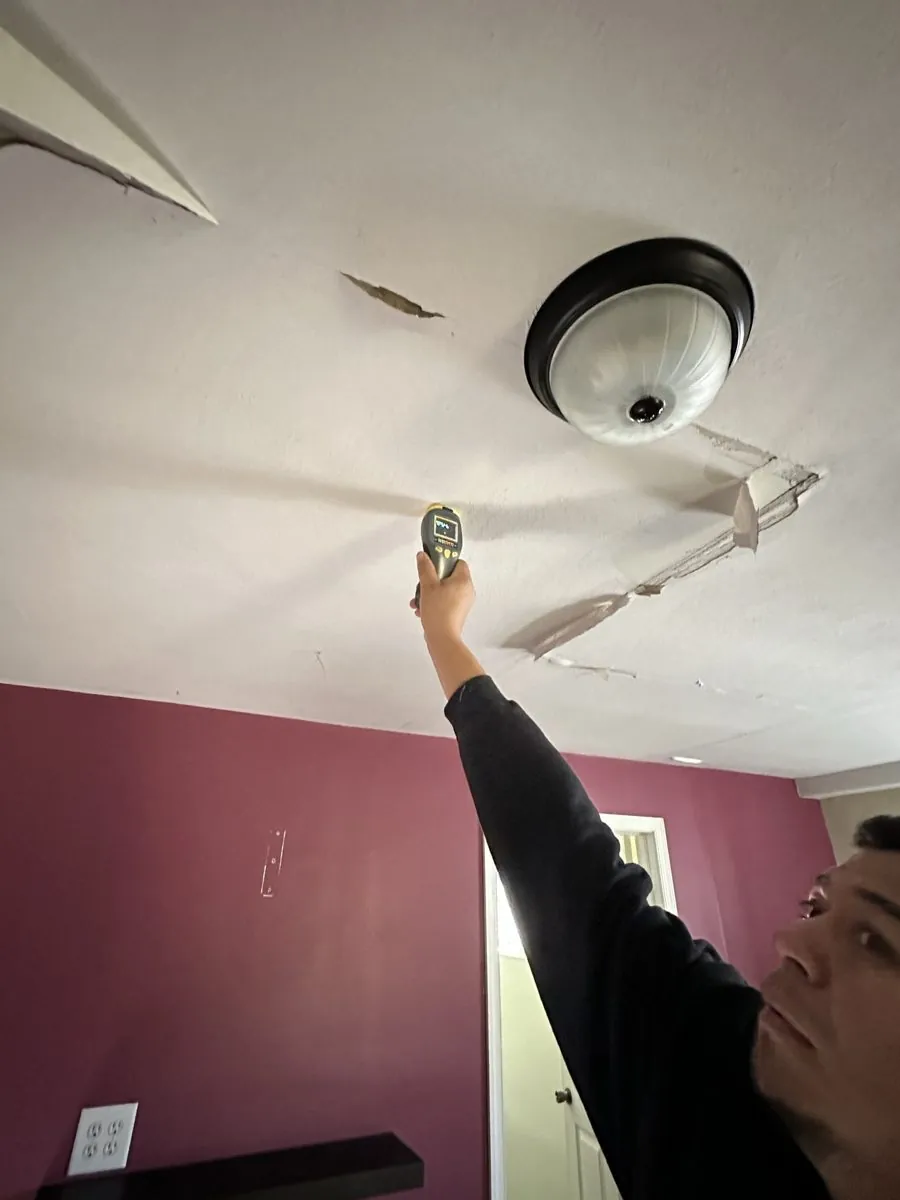
Each apartment gets its own readings, and the managing agent sees the same numbers you do. That can help the board approve opening a wall or replacing a strip of floor without ordering a second inspection. There's more on how we handle water damage in co-op and rental apartments.
Houses And 35th Avenue
LPC’s Jackson Heights Historic District report covers two other kinds of building inside the district. Attached and semi-detached houses, single-family and “convertible” two-family, began going up in 1924. Apartment buildings from the 1930s and 1940s, largely six stories, were built along 35th Avenue at the ends of the blocks.
In the attached houses, water usually starts low: a water heater, a washer hose or a supply line in the basement. From there it can travel along the foundation toward the house next door. We read the walls on your side and, if your neighbor agrees, on theirs, so both owners know exactly where the water stopped.
In the six-story buildings, height is the issue. A toilet overflow or a washer leak near the top can reach several apartments before anyone closes the line. We take meters to every floor it touched and dry the ceilings soaked from above in each unit, not just the first one someone reported.
Walk-ups and buildings outside the historic district get the same approach: we follow the water from the apartment where it began down through every unit it reached.
Landmark District
Most of a water job happens inside and leaves the building's face alone. Pumping, drying and taking out wet drywall don't change how a garden apartment looks from the street.
LPC's permit guidance says a Commission permit is needed for interior work that requires a Department of Buildings permit, or interior work that affects the exterior. If a rebuild heads that way, say rerouting plumbing or replacing a window frame that let rain in, we raise it with you and the managing agent early, so that one item doesn't stall the rest of the job.
Our Sequence

Know The Source
Whether it starts at a radiator valve in a garden apartment or a supply line in an attached house, each card shows how we handle that kind of leak.
Fast cleanup and drying after a pipe lets go.
See Burst Pipe CleanupWinter pipe failures handled end to end.
See Frozen Pipe DamageLeaks from above traced, dried, and repaired.
See Ceiling Water DamageFlooded basements pumped, dried, and restored.
See Basement Water DamageCo-op, condo, and rental water damage handled.
See Apartment Water DamageWater heater, HVAC, and appliance leak cleanup.
See Appliance LeaksClean-water overflow cleanup and sanitizing.
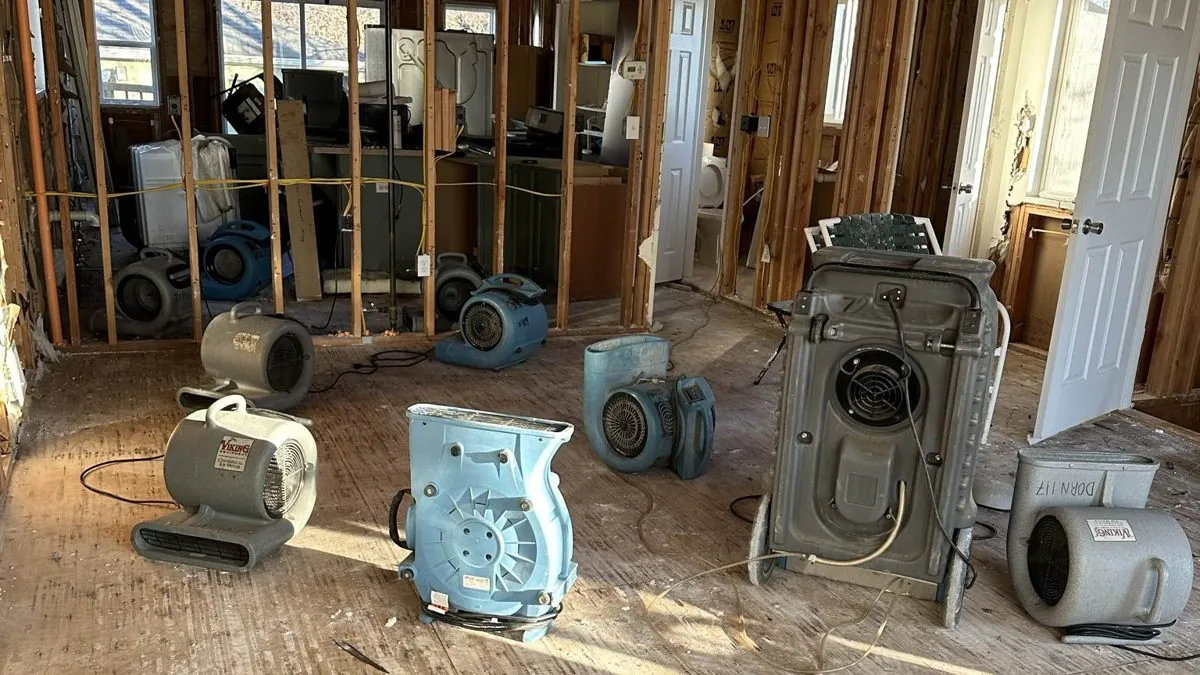
See Toilet Overflow CleanupAir movers and dehumidifiers that dry to the cavity.
See Structural DryingNeighbors Ask
Usually not. Brick can be dried where it stands. What tends to come out is whatever is fastened to it, like furring strips, drywall or insulation that stayed wet. We read the masonry on each visit and keep equipment aimed at it until the numbers drop.
Yes. The board or the managing agent can bring us in for the whole line. Each apartment still gets its own readings and its own list of what was removed, so every shareholder can see what happened in their unit.
Pattern and timing help. Water that appears after rain and spreads from an outside wall or the roof line points to the roof, while a steady wet spot under a bathroom points to plumbing. Our meters and thermal camera show where it's wettest. The roof repair goes to the building's roofer; we dry and rebuild the apartment.
For water damage in a Jackson Heights co-op off 35th Avenue or a wet basement in an attached house, phone All Star Restoration at 646-543-2242. We come out day or night for a free look. Outside the neighborhood, our page on water damage restoration across Queens covers the rest of the borough.
Water, fire, mold, or sewage, one call starts the recovery. We show up fast and we do not leave until it is done right.
Call 646-543-2242 Request ServiceRequest Service
We'll call you right back, and give you a free estimate. For an active emergency, the fastest way to reach us is by phone, day or night.