A pipe that splits while you are home gets noticed in minutes. That same pipe in an empty house keeps running until somebody opens the door, and that can be days. Water under street pressure does not stop on its own.
This guide covers what to set before you lock up, and what to do if you walk back in to water. All Star Restoration handles the water damage side: extraction, drying and the rebuild. For why pipes split and the signs of a freeze, read our winter guide to frozen and burst pipes.
Why empty homes get hit hardest
Two things go wrong in an empty home that someone living there would catch.
- The heat quits and nobody feels it. A boiler locks out, the oil tank runs dry or the power blinks, and the rooms slide toward the outdoor temperature.
- The leak has no witness. Nobody hears it or spots the first stain, so water runs until a neighbor, the super or the owner finds it.
The EPA's guide to mold and moisture says anything that gets wet should be dry in 24 to 48 hours if mold is to be kept out. A house that sat wet for a week is past that before anyone picks up a phone.
What temperature should I leave the heat on?
The American Red Cross says that if you are going away during cold weather the heat should stay on, set no lower than 55 degrees, at one setting day and night.
Treat 55 as the floor. A thermostat reads the hallway it hangs in, and the kitchen sink on a north wall or the enclosed back porch runs colder. In an older or drafty house, go a few degrees higher and prop interior doors open so heat reaches every room with plumbing.
Do not cover a cold room with a space heater while you are gone. The FDNY Foundation's fire safety site says it plainly: never leave a space heater unattended.
Before you lock up
- Heating system. Get the boiler or furnace serviced before the cold. The NYC Department of Buildings recommends yearly cleaning and service by a qualified person.
- Fuel. On oil, read the tank gauge and book a delivery. Keep it above a quarter tank, the level in a Massachusetts energy office tip sheet on oil heat.
- Cabinet doors. Open the ones under kitchen and bathroom sinks so room air reaches the pipes.
- Outdoor faucets. NYC DEP's page on protecting pipes says to turn off the water to outside faucets, remove hoses and drain the pipes.
- A person with a key. DEP suggests arranging for someone to turn on a faucet periodically while you are away. Maine's emergency management agency says to have someone check the house daily so you know the heat is on. Show them the main valve and leave numbers for your plumber and heating company.
One more call before a long trip: home policies often carry conditions about keeping the heat on and about how long a home sits empty. Ask your own agent what yours says.
Should I shut off the water when I go away?
For a trip longer than a few days, closing the main is the step that caps the damage. A split pipe can then release only what is in the lines, not a steady supply from the street. Maine's emergency management agency gives two choices for an absence: a daily check, or shutting off and draining the water system, except indoor sprinkler systems.
Close the valve where the service enters, then open the highest and lowest faucets so the lines empty. Four cautions:
- Fire sprinklers. Michigan's emergency preparedness office warns that a fire protection sprinkler system is deactivated when you shut off the water. With sprinklers, leave the water on and rely on daily visits.
- The water heater. Maine's drinking water program checklist for a winter shutdown says to shut off power to the water heater before draining it. On a gas heater, shut the gas to it too. If you close the main and leave the tank full, set the heater to its vacation or pilot setting, or switch it off, as the maker's manual says.
- The boiler. A steam or hot-water boiler may need its water feed to keep running. Ask your heating company before you close the main with the heat on. The next section covers boilers.
- The heat stays on. A closed main limits a leak. It does nothing for water sitting in traps, toilets or radiators.
Boilers change the plan
Many houses and apartment buildings in the five boroughs and Nassau County heat with a steam or hot-water boiler, and those systems hold water of their own. A Purdue Extension sheet notes that most hot water heating systems are not easily drained. So closing the house main does nothing for the radiators, and switching the boiler off leaves their water to freeze.
A boiler also takes on water. NYC's primer on one-pipe steam has building staff track water loss on the boiler's makeup water meter. If yours refills from the house supply, a closed main cuts that off. Ask your heating company which valve feeds the boiler and whether it can stay open while the rest of the house is shut. We dry buildings and do not service boilers, so that answer has to come from them.
Vacant apartments, empty floors and seasonal homes
- An apartment between tenants. HPD's heat requirements are written for tenants: 68 degrees by day when it is under 55 outside, 62 overnight. They set no number for an empty unit, yet the pipes in its walls serve the neighbors. Keep its radiators on and windows locked, and have the super walk it in every cold snap.
- A co-op or condo left for the season. Give the managing agent your dates and a way in. If water reaches a neighbor, the lease or bylaws decide how co-op and condo leak costs get split.
- A two-family with an empty floor. One main and often one boiler serve both floors. Shutting the empty floor's radiators to save fuel is how its kitchen and bath lines freeze. Leave them on and have someone look under the sinks every couple of days. DEP holds homeowners responsible for protecting their own pipes and meters.
- A seasonal house with the heat off. It needs full winterization by a licensed plumber: main closed, lines and water heater drained, traps and toilets protected. If a line lets go anyway, we do water damage cleanup for Nassau County houses as well as the boroughs.
Leak sensors and automatic shutoffs
Three devices help when nobody is home. None replaces a person with a key.
- Leak sensors. Battery units set by the water heater, under sinks and near the boiler that alert your phone when they get wet.
- Automatic shutoff valves. Fitted on the main by a plumber, they close the water when a sensor trips.
- Temperature alerts. A connected thermostat or freeze alarm that messages you when the house gets too cold.
If you come home to water
Work in this order.
- Stay out of standing water. The CDC's safety guidelines for reentering a wet home say never to turn power on or off, or use an electric tool or appliance, while standing in water. If you can reach the main power from a dry spot, turn it off. If not, call an electrician.
- Close the main water valve. If it will not turn, call a plumber. In an apartment, call the super.
- If you smell gas, get out. Con Edison's gas safety instructions are to leave immediately, take others with you and call 911 from a safe distance, without flipping a switch on the way.
- Leave the water off. A frozen line can be cracked at several points, and the extra breaks only show once water returns. DEP requires a licensed master plumber for broken pipe repairs, so have one check the system first.
- Take photos and video of every room before anything is moved.
- Call 646-543-2242 for the water. Our arrival is usually 30 minutes to an hour and a half, depending on the hour and traffic.
- Do not start demolition. Leave wet ceilings, walls and floors in place. Until they are metered, nobody knows which will dry where they stand, and tearing out early removes more than the job needed.
Cold house and dead faucets, but nothing on the floor? The lines may be frozen and not yet split. Close the main and see how to thaw a frozen pipe safely.
What we do after a long leak
A leak that ran for days is a different job from one caught in an hour. Water has passed through floors and wall cavities, and the lowest level may hold standing water. We pump that out first, then meter every floor to find what is wet behind surfaces that look fine.
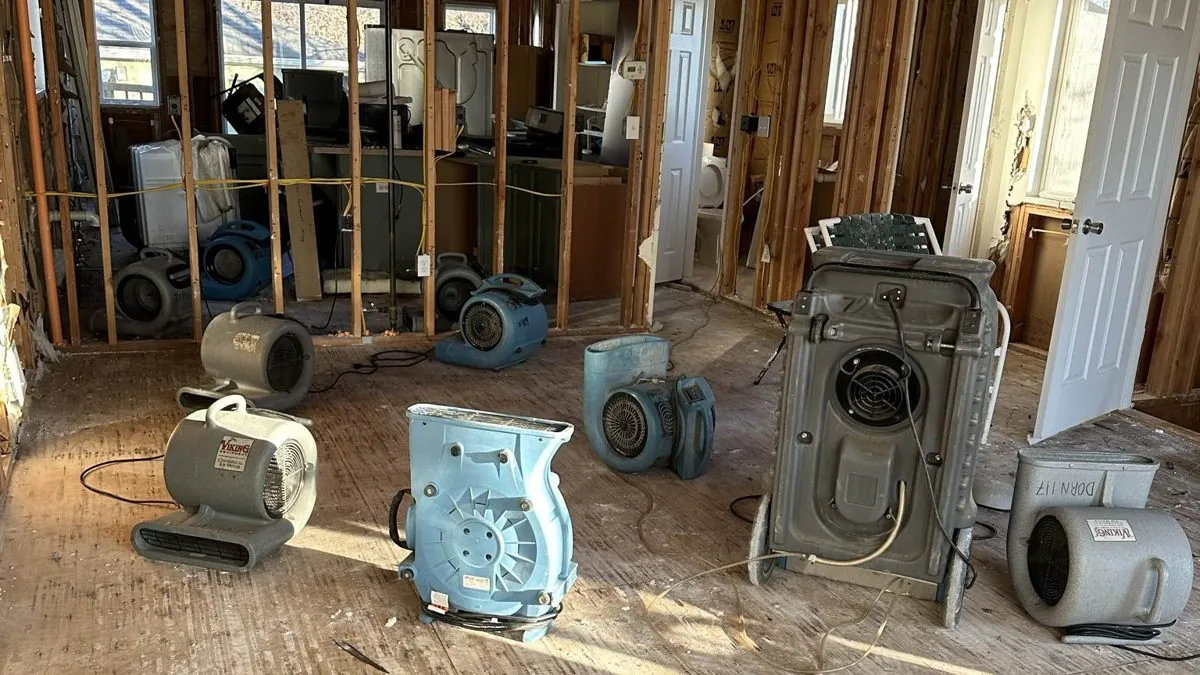
Next comes drying the structure itself, with dehumidifiers and air movers running until readings match a dry part of the house. If mold has started, we remove it under our New York State mold license. What cannot be saved comes out, and our own crew rebuilds it. The service is laid out under our winter pipe break service.
The bottom line
Keep the heat at 55 or higher, close the main if your heating system allows it, and give someone a key. If you come back to water, shut it off, stay safe around the power, and call before you pull anything apart.
Came home to a burst pipe
Day or night, All Star pumps out, dries and rebuilds after winter pipe breaks across the five boroughs and Nassau County.