Most radiator leaks start in one of three places: the valve at the base, the air vent on the side, or the joint where the radiator meets its pipe. Close the valve if it turns easily, put down towels or a pan, take photos, and tell the super or management in writing.
Then think about the floor. In a prewar building the puddle you can see is usually the smaller problem. The rest has soaked into the boards, slipped down the pipe opening, and is heading for the ceiling of the apartment below.
Why is my radiator leaking water?
Radiators in NYC apartments run on one of two systems. A steam system sends steam from the boiler to the radiator, and a hot-water system circulates heated water.
In a one-pipe steam system, the same pipe that carries steam in also drains the condensed water back out. A one-pipe steam primer from the NYC Retrofit Accelerator lists leaky radiators among the common problems in these buildings. Since steam only reaches the radiator when the boiler fires, a steam leak tends to appear once the heat comes on for the season.
Wipe the radiator and the floor dry, then watch where fresh water appears first.
| Where it's wet | Likely cause | Usually fixed by |
|---|---|---|
| Valve stem or handle | An old valve that has worn out | The super or a licensed plumber |
| Air vent on the side | Water trapped in a one-pipe radiator, or a failed vent | The super |
| Nut between radiator and valve | A loose or corroded connection | A licensed plumber |
| Under the radiator, no drip in sight | A cracked section, or water coming from higher up | A licensed plumber |
| Stain on the ceiling below | Water following the pipe through the floor | The super, then a drying crew |
First steps
- Set a pan or towels under the drip and keep swapping them out.
- If the valve at the base turns easily, close it clockwise all the way. On a one-pipe steam radiator, a valve left half-open traps water and can make the vent spit. Wear a thick glove, since the handle can be hot.
- Photograph the radiator, the floor and any stain, and note the date.
- Text or email the super or managing agent, and save a copy.
- Lift off any radiator cover so you can see the floor underneath.
- Let the neighbor downstairs know so they can look at their ceiling.
Valve safety
Stop at the valve. Don't loosen the nut, unscrew the air vent, or force a handle that's stuck. Old valves can break, and a slow drip can turn into hot water spraying across the room.
If water is coming out of the valve stem itself, don't keep turning it. Call the super instead. Repairs to the radiator and its piping belong to the super or a licensed plumber. We're a restoration company, not plumbers, and we take over once the leak is stopped.
When it's an emergency
A slow drip into a pan can wait for the super today. Treat it as an emergency when:
- Hot water or steam is spraying from the valve or vent
- Water has spread past the towels
- Water is coming through the ceiling or a light fixture below
- Water is near outlets, cords or a power strip
If steam or hot water is spraying, leave the room, shut the door, and get the super or management to shut down that line. Once it's under control and water is in the floor or the unit below, call us at 646-543-2242. Arrival is usually 30 minutes to an hour and a half, depending on the hour and traffic.
Where the water goes
Radiator water moves down and spreads slowly, so the damage gets ahead of what you can see.
- Into the floor. Wood strip flooring and the subfloor beneath them absorb it. Boards darken or cup around the radiator feet only after the wood underneath has been wet for a while.
- Down the pipe. The supply pipe passes through an opening in the floor, and water rides it into the ceiling of the unit below. Often the first sign is a stain in a neighbor's home. If that's you, here is what happens when water comes through the ceiling.
- Behind the cover. A radiator cover hides the leak and holds damp air against the floor and wall. Lift it off and check underneath a few times each heating season.
Who is responsible for a leaking radiator?
In a rental, the owner. The city's Housing Maintenance Code says the owner of a multiple dwelling "shall keep the premises in good repair" (Admin. Code §27-2005). HPD's tenants' rights page lists heat, hot and cold water among what owners must provide and maintain.
- Report it to the super, managing agent or owner first. HPD suggests a certified letter, with a copy kept, if nobody responds.
- If it still isn't fixed, file a 311 Water Leak in a Building complaint. NYCHA residents use NYCHA's own maintenance complaint instead.
- Rent-stabilized tenants can also file a decreased services complaint with NYS Homes and Community Renewal, as the Rent Guidelines Board explains.
The heat rules don't pause while your radiator is off. From October 1 to May 31, HPD's heat requirements call for at least 68 degrees between 6 AM and 10 PM when it's under 55 outside, and at least 62 degrees overnight no matter the outside temperature.
Co-ops and condos
Here the paperwork decides. That same 311 page tells co-op and condo owners to report maintenance problems to the owner, management company or board before going to HPD, because the agreement between the unit owner and the board may dictate who has to fix which conditions. Many proprietary leases make the shareholder responsible for radiators and valves inside the apartment, and some leave them with the building. Most boards also want approval before a radiator is replaced.
In practice, check what your proprietary lease or the condo bylaws say about repairs, and look at where the leak started rather than whose ceiling got wet. We lay out the usual splits in who pays for co-op and condo water damage. Whoever pays, every party works better from one record: photos, moisture readings, and a note of which units took water and where.
Why radiator heat won't dry it
It's tempting to think a hot radiator will bake the floor dry overnight. It only dries the surface. The top of the boards feels fine by morning while the subfloor, the pipe opening and the plaster below stay wet, and a cover keeps that damp air in place.
The EPA's mold and moisture guide sets a 24 to 48 hour window for drying wet areas before mold gets going, and a slow drip behind a cover can run longer than that before anyone notices. Painting the stain downstairs doesn't solve it either. The same EPA guide says to clean up mold and dry a surface before painting it, never paint over it.
Getting moisture out of wood and plaster takes dehumidifiers and air movers placed for that room, which is what structural drying means.
How we confirm it's dry
We find the water with meters and a thermal camera, then prove it's gone with numbers, not by touch.
- A reading from an untouched spot in the same room sets the dry baseline.
- The thermal camera shows where water traveled along joists and into the ceiling below, even far from the radiator.
- Equipment runs, we check readings on each visit, and it comes out when the wet areas match the baseline.
- If boards, subfloor or a section of ceiling can't be saved, we remove them and rebuild, so you deal with one company.
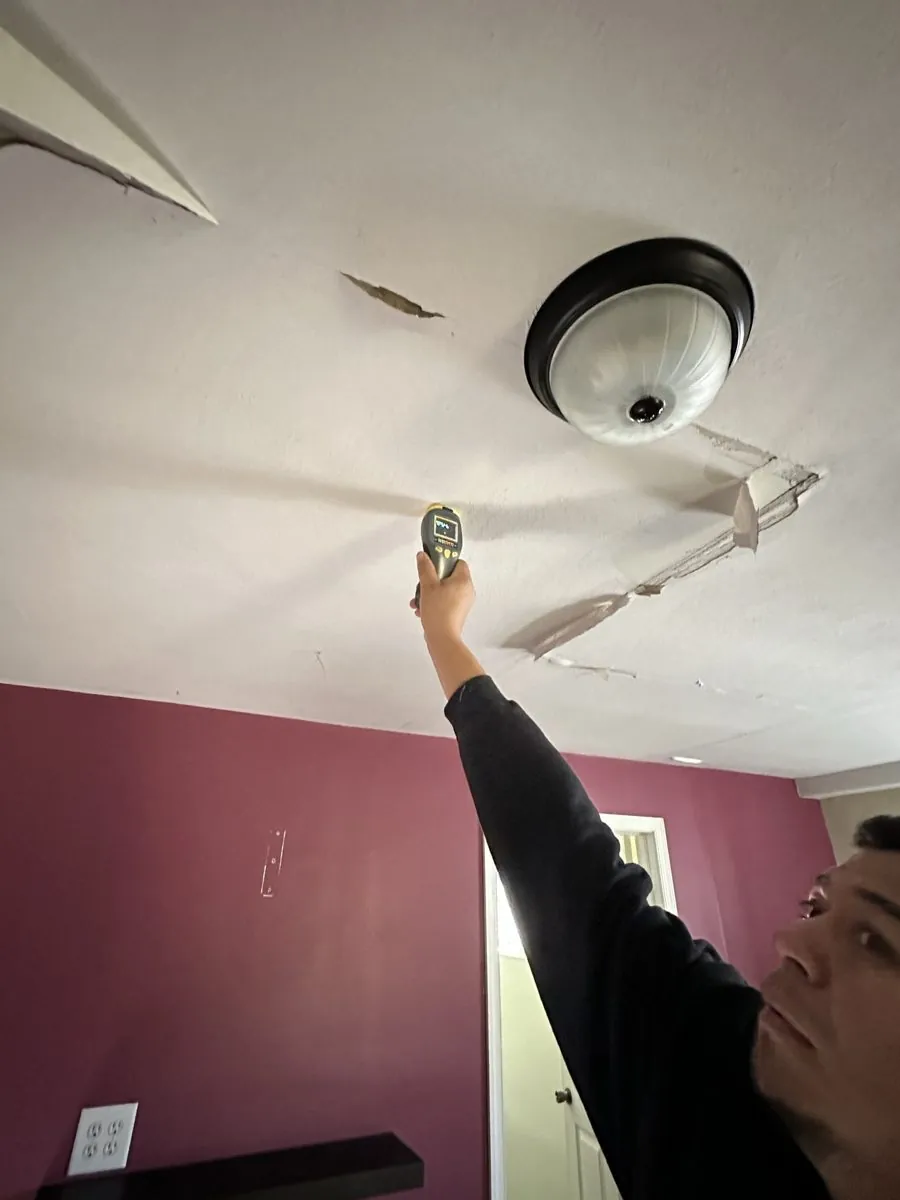
The full method is on our moisture detection page. We coordinate with supers, managing agents and boards to reach every affected unit, and the estimate is free.
The bottom line
A leaking radiator is two jobs. The super or a plumber fixes the radiator. The water already in the floor and the ceiling below needs drying, and a moisture reading is the only proof it's done.
Water in the floor or the unit below
All Star dries and rebuilds radiator leak damage in all five boroughs and Nassau County, around the clock.