A wet room is done drying when a moisture meter shows the walls and floors match a dry part of the same home. How long that takes depends on how long the water sat, what it soaked into, how much got wet, and how dry the air is.
On most of our jobs the drying equipment runs about three to five days. Plaster, hardwood and concrete can take longer. That is what's typical, not a promise, and the meter readings decide when it ends.
At All Star Restoration we take care of the water damage end of a leak: extraction, the dry-out that follows, and the rebuild.
The short answer on drying time
Two public sources frame that range. Neither is a promise for your room.
The first is a deadline. According to the EPA's mold and moisture guide, materials dried within 24 to 48 hours of a leak or spill will not grow mold in most cases. That is the goal for rugs, furniture and wet surfaces.
The second is a warning about the wood inside the wall. North Dakota State University Extension's dry-out guide, written for houses that were soaked through, says it may take weeks for wood to be dry enough to close a wall, depending on how wet it started and the drying conditions.
A room dried with professional dehumidifiers and air movers lands between the two. The materials and the air differ on every job, so expect an estimate on day one, and expect it to move as the readings come in.
What decides drying time
- How long the water sat. A burst pipe caught within the hour wets surfaces. A slow drip found a week later has soaked framing and subfloor. The EPA's water damage cleanup table covers the first 24 to 48 hours and sends anything wet longer than that to its mold guidelines.
- How much got wet. One wall is a small job. Three rooms plus the ceiling below hold far more water, and all of it leaves through the air.
- The air in the room. Wet materials only give up water to drier air. The EPA puts ideal indoor humidity at 30 to 50 percent, and under 60 at most. A Brooklyn cellar in July starts out damp. A steam-heated apartment in January starts out dry.
- What kind of water. The EPA table is for clean water. With sewage or other contaminated water it calls for an experienced professional, and says no fans until the water is known to be clean.
How each material dries
What the water soaked into matters most, and the job is only as fast as the slowest material in the room.
| Material | How it holds water | What that means for drying |
|---|---|---|
| Drywall | Wicks water up from the bottom edge | EPA's table lets it stay if it hasn't swelled and the seams are tight. Otherwise it is cut out, and the open cavity dries faster. |
| Plaster on lath | Thick and hard, slow in and slow out | Often stays on the wall, but needs more meter checks than drywall. |
| Hardwood strip floor | Takes water through the seams and from the subfloor | Usually the slowest thing in the room. |
| Concrete and brick | Hold water deep while the face feels dry | Cellar slabs and party walls keep giving off moisture, so new flooring and paint wait for readings. |
| Insulation and ceiling tiles | Hold water against the wall or ceiling | EPA's table says to discard and replace them. |
Prewar New York buildings stack the slow ones together: plaster walls, oak strip floors over plank subfloors, brick party walls. For floors, see our page on drying hardwood before the boards warp for good.
A drying job, stage by stage
IICRC-certified crews work from the ANSI/IICRC S500, the water damage restoration standard that the IICRC says describes the procedures to be followed and the precautions to be taken. In a home, the order is:
- Stop and extract. The source gets fixed and standing water is pulled out. Water removed as liquid never has to be dried out of the air.
- Map it and set a reference. Meters and a thermal camera trace how far the water went, including the apartment below. A reading on the same material in a dry room becomes the target.
- Open what can't dry closed. Baseboards, wet insulation and swollen drywall come out so air reaches the cavity.
- Set the equipment. Air movers push air across wet surfaces, dehumidifiers pull the water out of that air, and the room stays closed.
- Read it on every visit. Same marked spots each time. Equipment is moved or removed as areas reach the reference.
- Close up. Insulation, drywall, plaster patching and flooring go back only after the last wet spot matches.
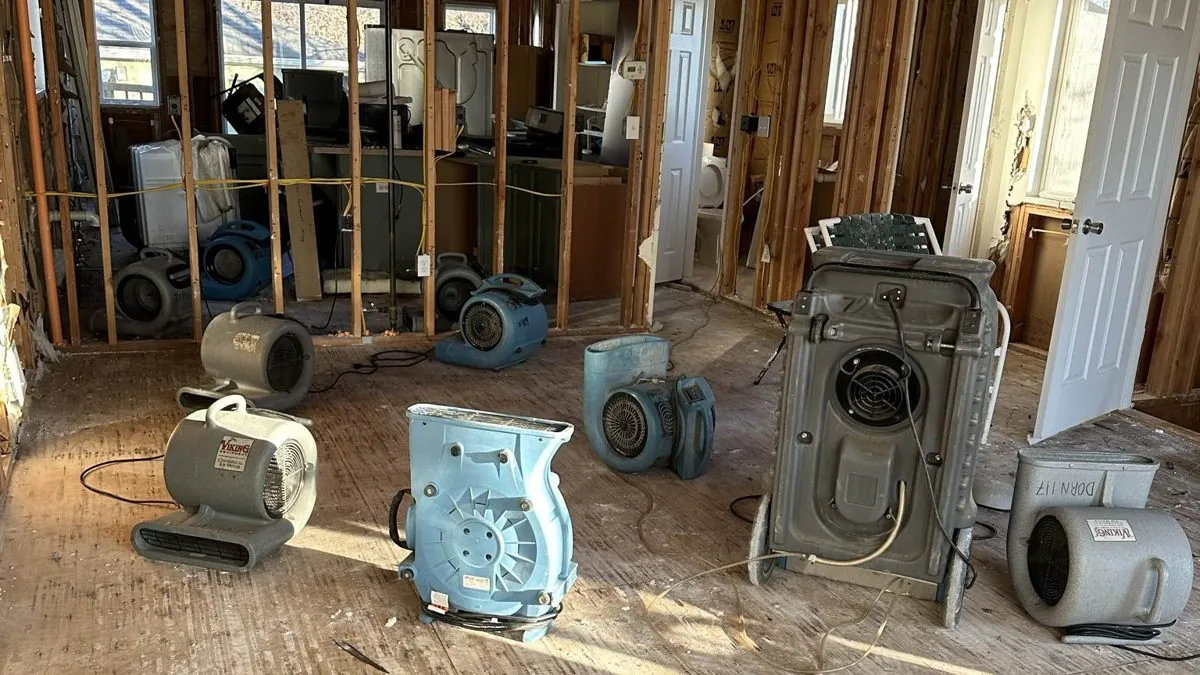
All Star runs these stages as one job, from extraction through drying the framing and subfloor to the rebuild. If water is in your walls or floors now, call 646-543-2242. Arrival is usually 30 minutes to an hour and a half, depending on the hour and traffic.
How a crew proves it's dry
Touch and looks fail here. A Massachusetts Department of Public Health note on moisture meters says many materials do not appear visibly wet even when saturated enough to support mold growth. The EPA's mold course says the meters can monitor the process of drying building materials.
Proof has three parts:
- A dry reference. A reading on matching material in a room that stayed dry. The Massachusetts note calls it the control location and says it is necessary for comparison.
- The same spots each visit. Readings at marked points, written down, so you can watch the numbers fall.
- A number for wood. The NDSU guide says wood should be below 15 percent moisture content before drywall, paneling or other coverings go on, and tells homeowners to have the contractor verify that with a meter.
We log readings on each visit and show them to you. The tools are explained on our page about meters and thermal cameras.
Why closing up early leads to mold
The pressure to close a wall is real. The room is torn apart, the contractor has a start date, and the board wants its hallway back. But insulation, drywall and paint over damp framing trap moisture where no air reaches it.
The NDSU guide warns that rebuilding too quickly can cause continuing problems such as mold growth. The EPA course lists the backside of drywall among the hidden places mold grows, which is how a wall closed wet can look fine from the room.
Paint is no fix either. The EPA says not to paint or caulk moldy surfaces, since the paint is likely to peel. Our guide to mold timing after a leak covers how quickly growth starts.
What you can speed up, and what you can't
You can help by:
- Clearing the room. Move furniture off wet floors and away from wet walls, and take up rugs, so air can reach them.
- Leaving the equipment alone. Keep it running and where it was set, with doors and windows the way the crew left them.
- Keeping the air dry. NYC Health's mold page says a dehumidifier or air conditioner helps lower indoor humidity, and that a hardware store humidity monitor can track it.
- Giving access. A super who can open the unit below or next door for each visit keeps the readings on schedule.
You can't rush dense materials. Plaster, hardwood and concrete let go of water at their own pace. EPA's table advises caution with heat on hardwood, so don't aim a heater at the boards.
Apartments, co-ops and rentals
Water in a New York apartment rarely stays in one unit. If the ceiling below is wet and nobody dries it, the floor structure between the two apartments stays wet no matter how much equipment runs upstairs.
In a rental, report the leak to the building manager first, as the NYC Health page tells tenants to do. In a co-op or condo, who dries what and who pays depends on the building's documents, which we cover in our co-op and condo responsibility guide.
The bottom line
Drying ends when the readings say so, not on a set date. Ask for the dry reference, the readings from each visit, and the final numbers before any wall or floor is closed.
Wet walls or floors right now
All Star dries water-damaged homes and apartments in the five boroughs and Nassau County, any hour of the day.